

Basement crack repair in Shelby Township, Michigan — leaking crack, high-pressure urethane injection, water test, and finished signature patch

Stop Basement Leaks Today!

Say Goodbye to Leaky Basement Cracks and Hello to a Dry, Healthy Basement

Basement Wall Crack Repair in Southeastern Michigan

Trusted Solutions for Poured Concrete Foundation Walls in Residential, Commercial, and Industrial Properties

A crack in your foundation wall is one of the most common ways water — and radon gas — enter a home. Whether you’re seeing a trickle after heavy rain, a stain that reappears every spring, or an active drip running down the wall, professional crack repair stops the problem at its source — from the inside, without excavation.

Suburban Basement has been sealing poured concrete foundation cracks in Southeastern Michigan since 2003. Every repair is water-tested on site to verify the seal is complete before we leave, then finished with our signature patch — backed by a lifetime transferable warranty.

This video explains how professional crack injection works and when it is the right solution for stopping basement wall leaks.

Looking to Stop Leaks at their Source?

Our Basement Crack Repair comes with our lifetime transferable warranty.

What Is Basement Crack Repair?

Foundation crack repair — also called basement wall crack repair — is a targeted waterproofing repair used to stop water intrusion through cracks in poured concrete foundation walls. Professional polyurethane or epoxy materials are injected into the crack to permanently seal it from the inside without exterior excavation.


This method is ideal when the issue is isolated to a specific crack and a full waterproofing system is not necessary.

What Basement Crack Repair Fixes

Basement crack repair is used on poured concrete foundation walls to permanently seal cracks that allow water intrusion, regardless of the direction the crack runs. This method is not intended for block, brick, or stone foundations, which require different repair approaches.


What about cracks in the basement floor? We can fill floor cracks cosmetically, and it is important to be clear about what that does and does not accomplish. Filling a floor crack improves the look of the slab. It is not a waterproofing repair. Water coming up through a floor crack is arriving from beneath the slab under hydrostatic pressure, and sealing the top of the crack does not change that — the water simply finds the next path. Where water is coming up through the floor, the fix is an interior drain tile system that relieves the pressure, not a filled crack.

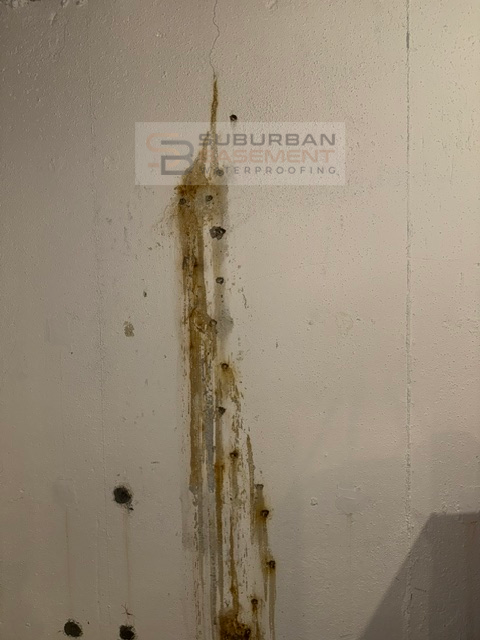
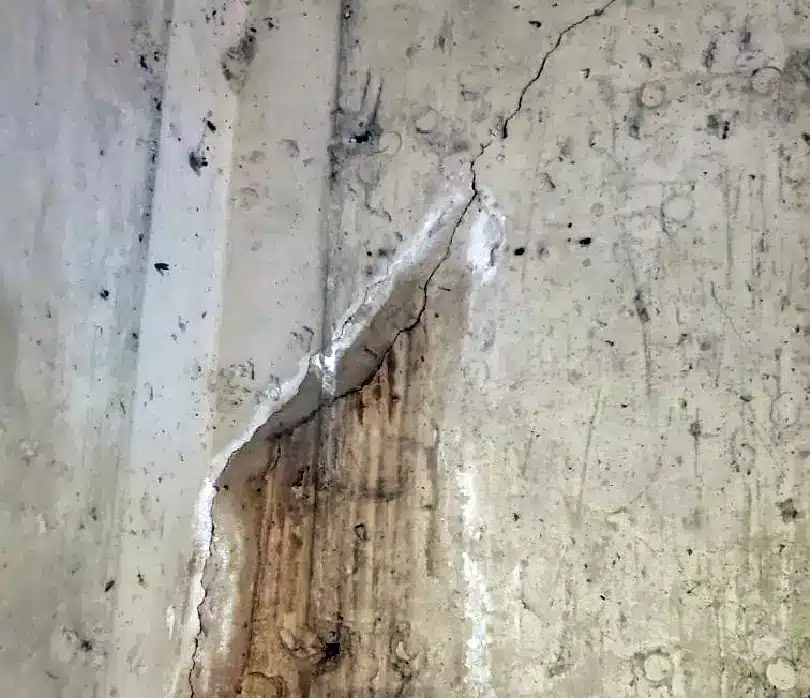
Leaking foundation wall crack before repair in Oakland Township, Michigan
A leaking foundation wall crack in Oakland Township before repair — water tracking down the wall.

Because the repair seals the crack internally, it remains effective even as the foundation experiences minor seasonal movement.

Not sure if your basement wall crack qualifies?

Request a free estimate and we’ll help you determine the right repair.

Why Basement Wall Cracks Happen

Basement wall cracks typically develop due to changing soil conditions, groundwater pressure, and natural concrete movement over time. In Southeastern Michigan, heavy clay soils and freeze-thaw cycles increase lateral pressure against foundation walls. These issues most commonly affect poured concrete foundation walls, which behave differently than block or stone foundations as they cure and respond to soil pressure.


Once a crack forms, water follows the path of least resistance through the wall, often leading to recurring leaks unless the crack is properly sealed.

How Our Basement Crack Repair Works

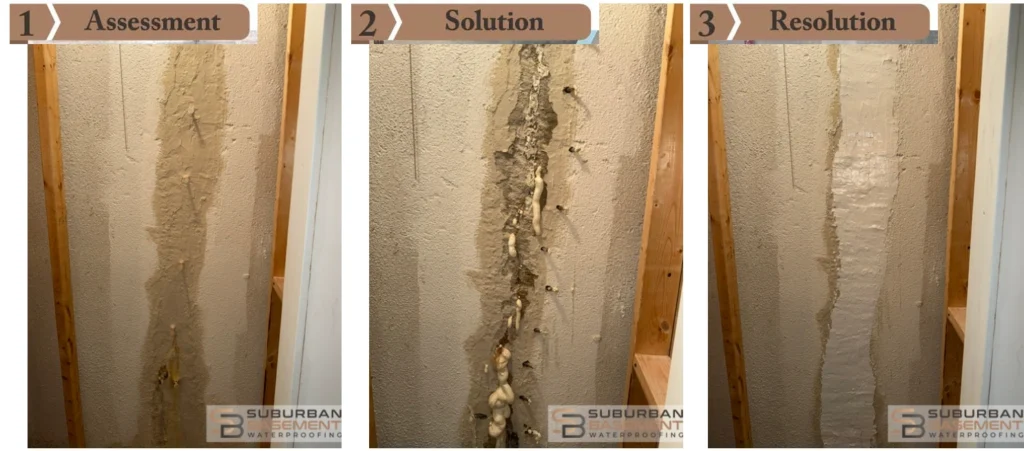
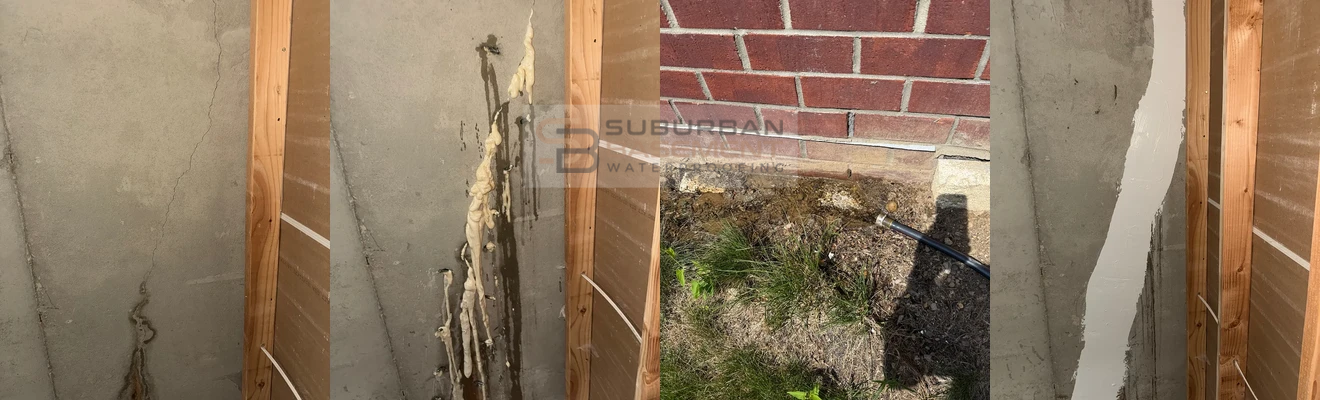
Three steps of basement crack repair in Macomb Township, Michigan: assessment of a failed previous repair, high-pressure injection, and the finished repair

Our crack repair process is engineered for poured concrete foundation walls. We select injection material based on crack conditions — polyurethane for actively leaking or moisture-affected cracks, epoxy where structural bonding is needed and the crack is dry.

Step 1 — Free On-Site Assessment
We inspect the foundation crack during a free evaluation — noting crack type (vertical, horizontal, diagonal), width, depth, and whether it is actively leaking or dry. This determines the right material and approach.

Step 2 — Injection Port Installation
Injection ports are installed along the crack at set intervals, typically every 6–8 inches. Ports allow injection material to reach the full depth of the wall from the interior surface.

Step 3 — High-Pressure Crack Injection
Using professional high-pressure injection equipment, we inject polyurethane or epoxy through each port, working from the bottom up. Polyurethane expands to fill the void and bonds to wet or damp concrete. Epoxy is used where structural bonding is needed and the crack is dry and stable.

Step 4 — Water Test
After injection is complete, we water-test the repaired crack on site. Water is applied directly to the repair area to verify the crack is fully sealed. We do not consider the job done until the water test confirms a complete seal.

Step 5 — Port Removal
Once the water test passes, injection ports are removed and the wall surface is cleaned.

Step 6 — Signature Patch
We apply our signature patch over the repair, leaving a clean, finished surface. The patch protects the repair area and can be painted or finished as needed.


On high-pressure urethane injection. High-pressure urethane injection drives the resin through the full thickness of the wall rather than sealing the face of it. That is the difference between a repair that holds and a patch that lets water back through the next wet season. It is also why excess foam pushing back out of the crack during injection is a good sign — it means the resin has travelled the full depth and reached the soil side of the wall.

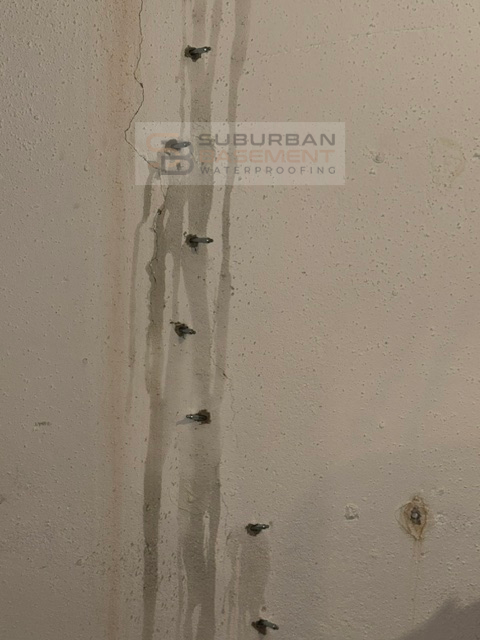
High-pressure injection port packers installed along a foundation wall crack in Bloomfield Hills, Michigan
Injection port packers set along the crack before high-pressure injection begins, Bloomfield Hills.
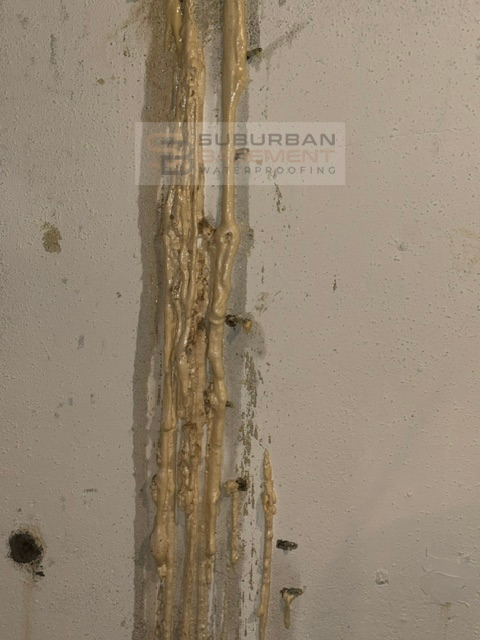
Excess polyurethane foam during high-pressure crack injection in Bloomfield Hills, Michigan
Excess foam pushing back out of the crack — the sign the resin has filled the full depth and reached the soil side.
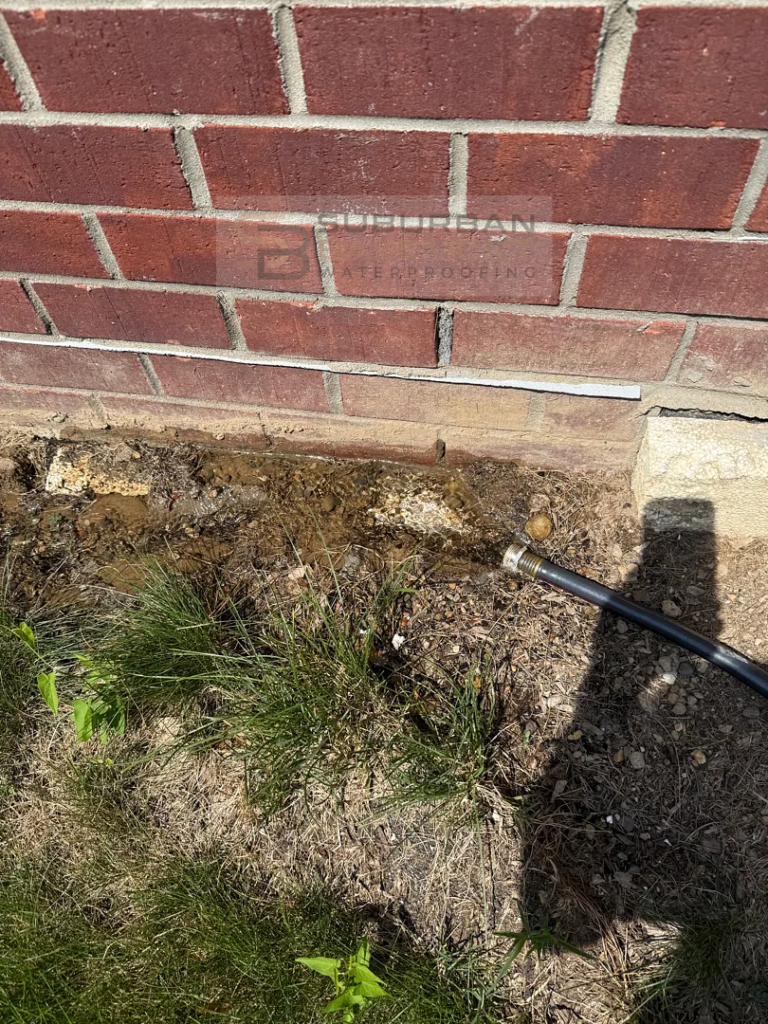
Water test verifying a high-pressure injection completely sealed a foundation crack in Shelby Township, Michigan
Water test on site — we do not call the job done until the test confirms the crack is sealed.
Foam and injection ports removed after a water test confirmed the crack was sealed, Bloomfield Hills, Michigan
Ports and excess foam removed after the water test confirmed the crack was sealed.
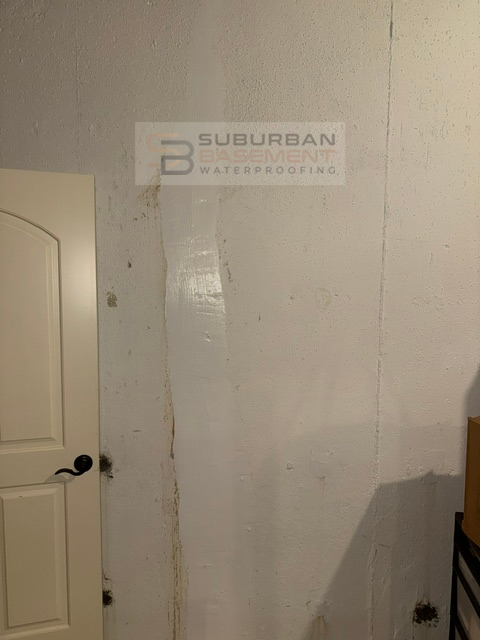
Completed high-pressure crack repair with signature patch in Bloomfield Hills, Michigan
Finished repair with our signature patch in Bloomfield Hills — ready to paint or finish over.

Applications for Residential, Commercial, and Industrial Properties

Our crack repair service is designed for a wide range of poured concrete foundation structures.

Residential Applications


  • Stop active leaks through basement walls
  • Seals vertical & diagonal foundation cracks
  • Address hairline cracks before leaks worsen
  • Prevents moisture damage and mold growth
  • Protecting finished & partially finished basements
  • Reducing dampness & musty basement odors
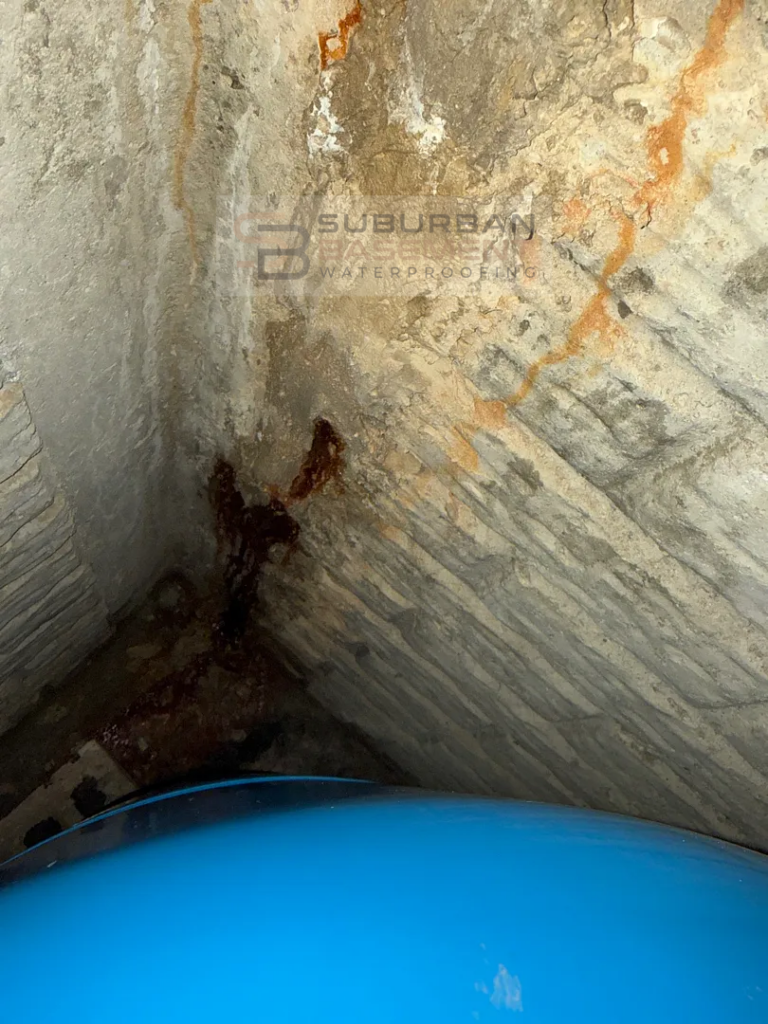
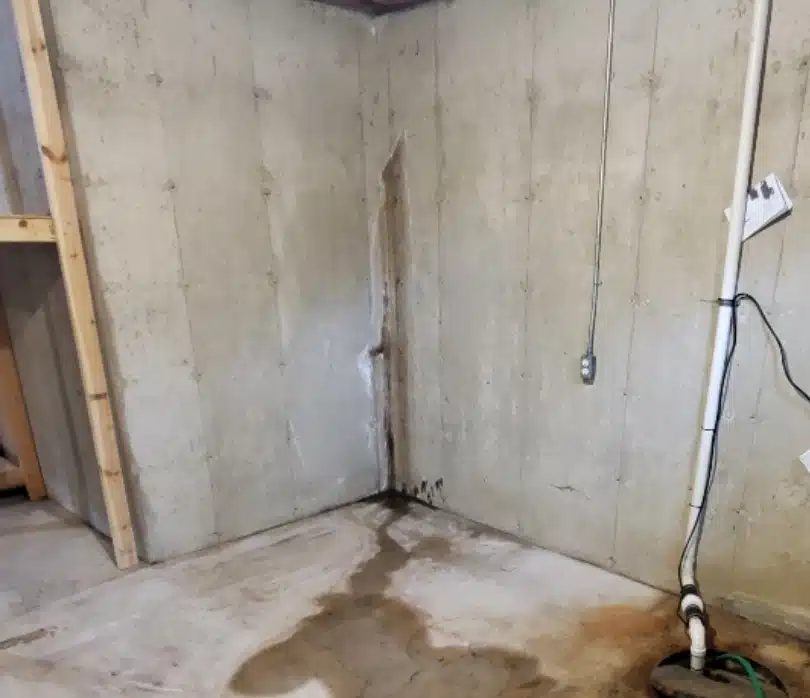
Corner crack in a poured concrete basement wall in a Southeast Michigan home

Commercial Applications


  • Sealing foundation wall cracks in office buildings
  • Managing water intrusion in retail  spaces
  • Protecting finished commercial basements
  • Prevent moisture damage to interior build-outs
  • Reducing leak-related maintenance issues
  • Supporting long-term property value
  • Housing cooperatives, apartment buildings and multi-unit residential
  • Work coordinated through property managers and management companies
Foundation wall crack with efflorescence staining in a Southeast Michigan commercial basement

Industrial  Applications


  • Crack sealing in structural concrete walls
  • Moisture control in utility and service areas
  • Preventing water intrusion near equipment zones
  • Protecting concrete in industrial facilities
  • Preventative crack sealing for infrastructure
  • Supporting long-term durability & performance
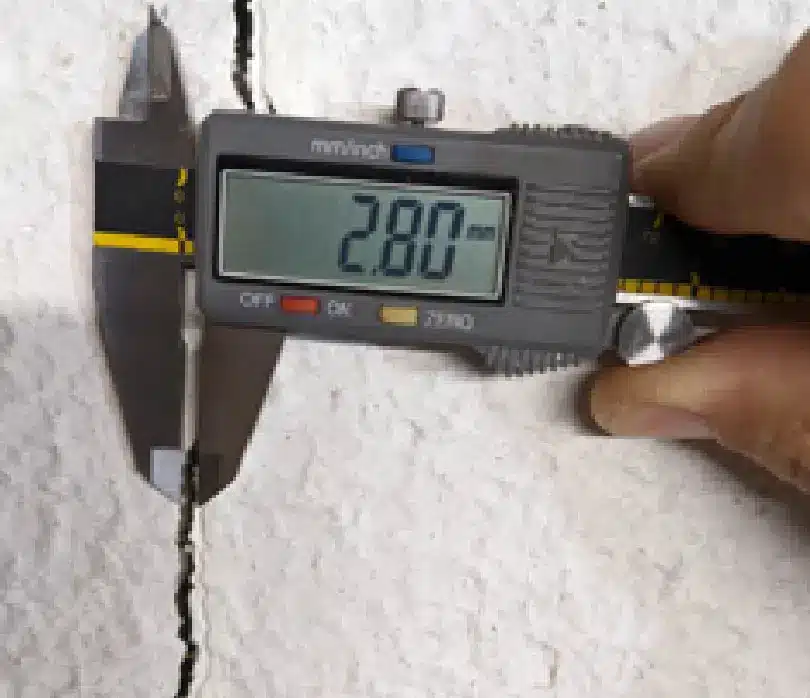
Wide foundation wall crack in an industrial concrete structure in Southeast Michigan

If a crack shows signs of structural movement, additional reinforcement such as
carbon fiber stitching or foundation wall stabilization may be recommended.

Seal out water and protect your property today

Why Choose Suburban Basement for Crack Repair

We treat your home, office or facility as if it were our own.


We are not a dealer for anybody’s system. Most of the large waterproofing companies in this market are franchises or dealer networks, and the crack repair they recommend is the one product line they are licensed to sell — which is why so many of them start every crack job by installing a drainage system. We are independent. High-pressure urethane injection, epoxy injection, exterior excavation and waterproofing, curtain grouting, carbon fiber and steel bracing — we install all of them, so the recommendation comes from what we find on the wall rather than from what we would rather sell.


What Basement Crack Repair Actually Costs


Foundation crack repair by injection is the most cost-effective foundation repair we do, and the least invasive. There is no excavation, nothing comes out of the yard, nothing inside gets demoed, and most jobs are finished in a day.


Sometimes a single crack is genuinely all that is needed. Other times the crack is one part of the job — paired with rod hole repairs, beam pocket repairs, or work on another section of wall letting water in the same way. The honest question is not what an injection costs. It is whether an injection is the whole job, and that is what the on-site evaluation is for.

Suburban Basement

Locally Owned
Independently Operated
Licensed & Insured
For Over 20 Years

Serving: Southeastern Michigan

Have Foundation Cracks?

We’re here to help. Get your free assessment today.

Frequently Asked Questions

Does crack injection work on all foundation types?

Crack injection and sealing is designed for poured concrete foundation walls only. Block, brick, and stone foundations require different repair methods, which our team can review during a free assessment.

Is crack injection enough to fix a leaking basement wall?

In many cases, yes. Crack injection is a focused repair designed to seal individual foundation wall cracks that allow water intrusion. When leaks are isolated, this approach can be an effective solution without installing a full foundation system.

How long does basement crack repair take?

In most cases, crack repair is completed in a single day. Once on site, we install injection ports, inject the crack under high pressure, perform a water test to confirm the seal, remove the ports, and apply our signature patch — all in one visit.

Do you always use polyurethane for crack injection?

Not always — the condition of the crack decides. Polyurethane is used on actively leaking or moisture-affected cracks; it reacts with water and expands to fill the void through the depth of the wall. Epoxy is used where the crack is dry and stable and structural bonding is what is needed. Most of the repairs we do are polyurethane, because most of the cracks we are called out to are wet.

Can all basement wall cracks be repaired with injection?

In most cases the crack itself can be sealed by injection. What changes is whether injection is the whole repair. Where a wall has moved — a bowing wall, or a crack caused by significant structural movement — the crack can still be injected, but wall bracing is needed alongside it as part of a multi-part repair. Block foundation failure is addressed differently. We evaluate the wall and explain what the full repair involves.

Will crack injection permanently stop the leak?

When properly installed in suitable conditions, crack repair is designed to provide long-term protection against water intrusion. Performance depends on crack type, wall condition, and overall site conditions.

Do I need a full basement waterproofing system for a wall crack?

Not always. When water intrusion is coming from an isolated foundation wall crack, crack injection may be the appropriate repair. If conditions indicate a larger system is necessary, we will walk you through the reasons and available options.

Why does my patched crack still leak?

Surface patches — hydraulic cement, mortar, or caulk — sit on the face of the wall. The crack runs through the full thickness of the concrete, so water still travels through it and works the patch loose from behind. A repair holds when the crack is filled through its full depth. High-pressure urethane injection does that on wet and wider cracks; epoxy injection does it on thinner, dry cracks. We repair previously patched cracks regularly.

What does a horizontal crack in my basement wall mean?

A horizontal crack is different from a vertical or diagonal one. It usually indicates lateral soil pressure pushing against the wall rather than normal concrete movement, so the first question is not how to seal it — it is whether the wall has moved. We evaluate for wall movement before recommending injection. If the wall is moving, sealing the crack alone does not address the cause.

Crack Repair Glossary​
Efflorescence

A white, powdery residue on concrete caused by moisture moving through the material and carrying salts to the surface. It is not structural damage, but it indicates ongoing moisture behind the concrete.

Pressure created by groundwater pushing against foundation walls or slabs. This pressure can lead to cracks, movement, and water intrusion, especially in clay-heavy Michigan soils.

The downward movement of a foundation caused by soil compression, erosion, or moisture changes. Settlement can result in wall cracks, uneven floors, and shifting structural elements.

Small access points installed along a crack to inject polyurethane foam or epoxy deep into the concrete. Ports ensure the repair material fills the full depth of the crack for a proper seal.

The process of a repair material hardening and reaching full strength. Polyurethane foam cures quickly, often within minutes to hours, allowing faster use compared to traditional concrete repairs.

A professional repair method that seals foundation wall cracks from the inside out by filling the full depth of the crack with specialized materials to stop water intrusion.

Seasonal temperature changes that cause soil to expand and contract, increasing stress on foundation walls and contributing to cracking over time.

The seam where one concrete pour meets another that has already set. The two pours never bond fully, so a cold joint is a natural path for water and a common place for a leak to appear.

Injecting repair material into a crack under pressure so it travels through the full thickness of the wall rather than sealing only the surface. Pressure is what carries the material to the soil side of the foundation.

The material used on actively leaking or damp cracks. It reacts with water and expands to fill the void through the depth of the wall, which is why it suits wet conditions.

A rigid material used where a crack is dry and stable and structural bonding is what is needed. Epoxy is not the choice for an actively leaking crack.

A crack that forms as poured concrete cures and loses moisture. Common, usually vertical or diagonal, and typically a water problem rather than a structural one.

Running water against the repaired crack on site after injection to confirm the seal before leaving. A repair is not finished until the test passes.

The finish applied over a completed crack repair. It covers the repair area and leaves a clean surface that can be painted or finished over.

A naturally occurring soil gas that enters a home through the same openings water does, including foundation cracks. Sealing a crack closes one of its entry paths.

Basement Crack Repair Photos — Poured Concrete Foundation Walls

The examples below show Basement crack repairs on poured concrete foundation walls across Southeast Michigan, highlighting how cracks form, how leaks are identified, and how proper injection repairs are performed.

MORE WORKS

Similar Projects