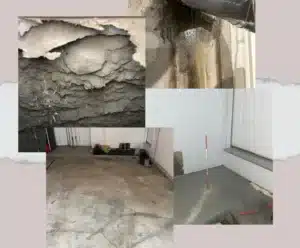
- Loss of soil support beneath foundations and slabs
- Settlement-related movement and uneven surfaces
- Weak or eroded soils beneath load-bearing areas
- Ongoing soil instability that can lead to further damage
Deep Injection Soil Stabilization in Southeastern Michigan
When the Problem Is the Ground, Not the Structure
Residential, Commercial & Industrial Properties
The floor in the back room slopes toward one corner. A door that shut fine last year now sticks and will not latch. Cracks reopen in the addition no matter how many times they get patched. The garage floor has pulled away from the wall, and the gap keeps getting wider.
Repairs that treat the crack, the door, or the floor keep failing because none of them touch what is actually moving. The soil underneath has lost its ability to carry the load.
Deep injection soil stabilization treats that soil directly — below grade, through injection lances, without excavating your yard or shutting down your property.
See How Deep Injection Soil Stabilization Works in Real Michigan Conditions
Watch how deep injection soil stabilization is used to address unstable soil conditions, what problems it helps correct, and when it is commonly applied to support foundations, slabs, and surrounding site areas.
Call Now: 586-465-5500 or Request a Free Assessment Online
What Deep Injection Soil Stabilization Is
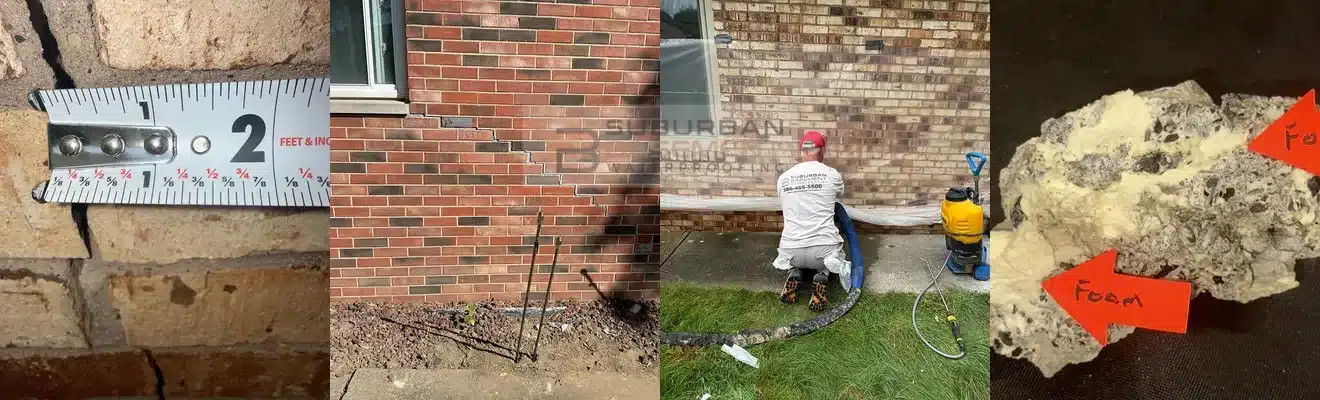
Deep injection is a trenchless repair method. Injection lances are driven below grade to a depth determined by site conditions. Expanding structural polyurethane is injected through those lances into the weak soil.
The material permeates loose soil, fills voids left by washout or poor compaction, and compacts the surrounding ground as it expands. As it cures it binds loose material into a denser, more stable mass with greater load-bearing capacity than it had before.
No excavation. No trenching across the yard. No removing and replacing the structure above.
Deep Injection, Void Filling, or Concrete Leveling — Which One Do You Need?
These three get used interchangeably, including by contractors. They are different work, and what separates them is depth. How the material is delivered follows from how deep the problem sits.
- Concrete leveling — the slab has sunk. Material is injected through small holes drilled in the slab, and the slab is raised back to level.
- Concrete void filling — a void sits near the surface, directly beneath the slab. Material is injected through a grid of holes in the slab to fill it. The slab is not lifted.
- Deep injection — weak soil, or voids, sit well below the slab. Injection lances are driven down to that depth, strengthening the soil and filling deeper voids.
Why Deep Injection Needs Lances
A void directly under a slab can be reached by drilling through the concrete and pumping material straight into it. A problem several feet down cannot. There is no way to deliver material accurately to that depth from the surface.
Injection lances are driven to the depth where the weak layer or the void actually sits, so the material goes where the failure is rather than where it is convenient to drill. The lance is a consequence of depth. It is what makes deep injection deep.
These Are Often Used Together, Not Instead of Each Other
One property frequently needs more than one of them, in sequence. A void beneath a slab is filled first, and the slab is levelled afterward. Filling establishes support underneath, then levelling brings the concrete back to grade. Levelling a slab over an unfilled void only puts the concrete back where it will sink again.
A sunken driveway is usually a slab problem. A structure that keeps moving after it has already been repaired is usually a problem further down.
What Deep Injection Soil Stabilization Fixes and Stabilizes
When soil beneath or around a structure becomes weak, washed out, or poorly compacted, it may no longer provide consistent support. Over time, this can contribute to foundation settlement, sinking concrete, uneven surfaces, and ongoing movement that worsens if left unaddressed.
Deep injection soil stabilization addresses these conditions at their source by strengthening soils below grade, rather than relying solely on surface-level repairs.
Deep Injection Helps Correct:
By restoring strength and stability below the surface, deep injection helps reduce continued movement and supports long-term performance.
What Causes Soil Instability Beneath & Around Foundations?
Soil conditions beneath and around a structure change over time. In Southeastern Michigan a handful of causes account for most of what we see:
- Poorly compacted fill — extremely common under additions, sunrooms and attached garages, where fill was placed quickly and never properly compacted before the slab went down.
- Soil washout — downspouts, poor grading, or a failed drainage system moving soil out from under the structure.
- Expansive and compressible soils — the clay-heavy soils common across Southeastern Michigan swell when wet and shrink when dry, moving through the seasons.
- Long-term moisture change — a wet spring followed by a dry summer, repeated for years.
- Freeze-thaw cycling — Michigan winters drive repeated expansion and contraction in the upper soil layers.
When these conditions reduce soil strength, the foundation or slab above may begin to settle, shift, or crack.
Think This May Be Affecting Your Property?
A professional evaluation can help determine whether
soil instability is contributing to settlement or movement at your home or building.
Call Now: 586-465-5500 or Request a Free Assessment Online
How Our Deep Injection Soil Stabilization Works
Deep injection strengthens weak or unstable soils well below grade, restoring reliable ground support where erosion, washout, or poor compaction have contributed to movement.
Rather than focusing on surface symptoms alone, this approach targets soil instability at its source, helping reduce continued settlement and improve long-term support for the structures above.
Two Depths at Every Injection Point
Stabilizing a structure such as a basement foundation or a garage foundation is usually not a single-depth operation. At each injection site we typically set two injection lances, one at a shallower depth and one deeper, so the soil column supporting the foundation is treated at more than one level rather than only at the point where the failure is most obvious.
Weak soil rarely sits in one clean layer. Treating a single depth can leave an untreated layer above or below it that continues to move.
Where soil conditions allow, a single lance at one shallower depth is sufficient. That is the exception rather than the standard, and it is determined on site rather than assumed before the assessment.
Why Polyurethane and Not Cement Grout
Soil fails because it can no longer carry what is on top of it. Cement-based grout weighs roughly 140 pounds per cubic foot. Injecting it into failing soil adds substantial new weight to ground that is already unable to support the load it has.
Structural polyurethane weighs roughly 3.5 to 5 pounds per cubic foot, in the range of thirty to forty times lighter, while developing high compressive strength as it cures.
It strengthens the soil without burdening it. It also cures in minutes rather than days, which is why a property stays in use while the work happens.
Because deep injection addresses soil conditions rather than structural components, it is often combined with other foundation, drainage, or surface repair work when a broader correction is needed.
Need expert guidance on whether deep injection is the right approach?
Call Now: 586-465-5500 or Request a Free Assessment Online
Applications for Residential, Commercial, & Industrial Properties
Deep injection soil stabilization is used across a wide range of property types where unstable soil conditions are contributing to movement or loss of support.
Residential Applications
Basement Foundations
When soil beside or beneath a basement foundation washes out or was never properly compacted, the wall loses the support it was built to rely on. Deep injection restores that support without excavating the perimeter.
Garage Foundations
Attached garages are frequently built on fill. When that fill settles, the garage separates from the house — a widening gap at the joint, a floor that drops away from the wall, doors that stop sealing at the bottom.
Rooms Built on a Slab
Additions, sunrooms, family rooms and three-season rooms built slab-on-grade are among the most common soil-settlement problems in Southeastern Michigan housing. Fill placed under an addition is rarely compacted to the standard of the original house, so the addition settles at a different rate than the structure it is attached to. The result is sloping floors, sticking doors, and cracks at the seam that reopen every time they are patched.
Commercial Applications
The method does not change with the size of the building. What changes is what excavation would cost you.
Conventional soil repair on a commercial property means closing a section of the site — pulling up slab, trenching, staging equipment, and putting it all back. Deep injection is performed through small injection points, so the surrounding area stays in service while the work is underway.
- Subgrade stabilization beneath slab-on-grade floors and load-bearing areas
- Settlement affecting entryways, loading areas and interior floor slabs
- Unstable soil beneath parking lots, drive lanes and other large slab surfaces
- Soil washout beneath structural support zones
- Sites where excavation would interrupt operations, access, or tenant use
- Properties where a lightweight solution is required because the subgrade cannot accept additional load
Suburban Basement is a BOMA member and works with property managers, general contractors and building owners across Southeastern Michigan.
Industrial Applications
- Subgrade stabilization beneath large floor slabs
- Soil washout affecting structural support zones
- Reinforcement of weak soils in high-load environments
- Unstable soil beneath roadways, yards and heavy equipment areas
Not Sure If the Soil Is the Problem?
Call Now: 586-465-5500 or Request a Free Assessment Online
Why Choose Suburban Basement for Deep Injection Soil Stabilization
At Suburban Basement Waterproofing, deep injection is recommended only after a careful evaluation of soil conditions and site-specific factors. Our focus is on matching the right solution to the underlying issue, not forcing a one-size-fits-all repair.
For Engineers, General Contractors and Property Managers
Suburban Basement works to an engineer specification when one exists, and will coordinate directly with the design professional on scope, injection layout, and depth.
When an Independent Soil Evaluation Is Worth Getting
Most residential settlement does not require a formal geotechnical study. It is worth commissioning one when:
- The structure keeps moving after it has already been repaired
- An engineer or architect is already involved
- The property is commercial, industrial or municipal
- An insurance claim or legal question depends on the cause
- The scope of the project warrants documented subsurface data before committing to a repair approach
Suburban Basement does not perform soil testing. For a formal evaluation, including soil borings, load-bearing analysis, or a written geotechnical report, we recommend hiring an independent third-party firm.
We have no stake in the result, and a report you commissioned yourself is a report you can trust and can take to any contractor.
- Evaluation-driven recommendations
- Experience with residential, commercial, & industrial properties
- Trenchless stabilization — no excavation required
- Knowledge of Southeast Michigan soil conditions
- Clear communication and realistic expectations
Experience the Suburban Basement Difference
Call Now: 586-465-5500 or Request a Free Assessment Online!
Suburban Basement
Locally OwnedIndependently OperatedLicensed & InsuredFor Over 20 Years
Serving: Southeastern Michigan
- Macomb County
- St. Clair County
- Oakland County
- Lapeer County
- Wayne County
- Call: 586-465-5500
Have Unstable Soil?
We’re here to help. Get your free assessment today.
Frequently Asked Questions
How is deep injection different from concrete leveling?
Concrete leveling raises a slab by injecting material through holes drilled in the slab itself. Deep injection treats the soil underneath, through lances driven below grade. Leveling corrects the surface. Deep injection addresses why the surface moved.
How is deep injection different from void filling?
Both fill voids. The difference is depth. A void directly beneath a slab is close enough to reach by drilling through the concrete and pumping material into it. When the void or the weak soil sits several feet down, it cannot be reached that way, so injection lances are driven to that depth instead. Both methods fill voids and strengthen the soil around them. Depth is the only thing that separates them.
Can more than one method be used on the same job?
Yes, and it is common. A void beneath a slab is often filled first and the slab levelled afterward. Filling establishes support underneath, then levelling brings the concrete back to grade. Levelling a slab over an unfilled void only puts the concrete back where it will sink again. Which methods a job needs, and in what order, is determined during the assessment.
How can I tell if soil instability is causing movement at my property?
Signs of soil instability may include cracking walls, uneven floors or slabs, stair-step cracks in masonry, separating joints, or recurring settlement even after surface repairs. A professional evaluation can help determine whether unstable subsoil is contributing to the movement.
Can deep injection be used beyond foundations?
Yes. Deep injection is used wherever unstable soil has reduced support beneath a load-bearing structure or surface. That includes basement and garage foundations, footings and slab-on-grade rooms, and it also includes unstable soil beneath concrete slabs such as roadways, parking lots, loading areas and other large slab surfaces. It treats soil, so it applies wherever soil is the cause.
Will deep injection lift my foundation back up?
Deep injection as performed by Suburban Basement is a stabilization method. The goal is to strengthen weak soil, fill voids, and stop continued settlement. It is not offered as a structural lifting service. If your structure needs to be raised, that is a different scope and we will tell you so during the assessment.
How deep does the injection go?
Depth is determined by site conditions, specifically where the weak layer sits and where competent soil begins. On most foundation stabilization work we set two lances at each injection point, one shallower and one deeper, so more than one level of the soil column is treated. Where conditions allow, a single lance at a shallower depth is enough. That is established during the assessment rather than assumed in advance, which is why the same service can look different on two houses on the same street.
Does deep injection require digging up my yard?
No. It is a trenchless method. There is no open trench, no removed landscaping, and no excavation around the foundation. Injection lances are driven into the ground through small entry points.
Where an injection point falls on a paved surface, we drill a small hole through the concrete or asphalt so the lance can be driven into the soil beneath. That is a drilled hole rather than an excavation, and the surface stays otherwise intact.
Is deep injection safe to use around groundwater?
Yes. The polyurethane materials used in deep injection are designed to be inert once cured and are certified to NSF/ANSI/CAN 61 for contact with drinking water, making them suitable for use near groundwater when installed properly.
Will deep injection prevent future settlement?
Deep injection stabilizes weak or eroded soil at its source, which significantly reduces the risk of continued settlement. Long-term performance depends on site conditions and addressing contributing factors such as drainage or water management when needed.
Do I need a soil test before deep injection?
Usually not for residential work. Assessment is based on site conditions, the pattern of movement, drainage, and construction history. For commercial properties, engineer-involved projects, or a structure that has already been repaired once, an independent geotechnical report is worth having, and we recommend commissioning it from a third-party firm rather than from us.
How long does the work take?
Most residential deep injection is completed in a day. The material cures within minutes of injection, so there is no extended waiting period before the area returns to normal use.
Can I stay in the house while it is done?
Yes. The work is performed through small entry points and the cured material is inert. There is no need to vacate.
Why not just use cement grout?
Cement grout weighs roughly thirty to forty times more than structural polyurethane. Adding that weight to soil that is already failing to carry its load works against the repair. Polyurethane strengthens the soil without adding meaningful load, and it cures in minutes instead of days.
How much does deep injection soil stabilization cost?
The cost of deep injection soil stabilization in Michigan depends on several factors, including the depth of unstable soils, the size of the affected area, access conditions, and the severity of settlement. Because deep injection targets underlying soil conditions rather than surface symptoms, pricing is determined after an on-site evaluation to ensure the correct approach is used. Suburban Basement provides site-specific assessments to determine whether deep injection is appropriate and what level of stabilization is required.
Deep Injection Glossary
Soil Stabilization
Methods used to improve the strength and load-bearing capacity of soil so it can properly support structures, slabs, or surrounding site features.
Deep Injection
A soil stabilization technique that injects expanding materials below grade to fill voids, compact loose soils, and improve ground support where instability exists.
Soil Remediation
Corrective actions taken to address soil conditions that affect stability or performance.
Subsoil
The layer of soil beneath the surface that provides structural support. Weak or unstable subsoil is a common cause of settlement and movement.
Soil washout
The loss of soil caused by water movement, often due to poor drainage or erosion, which can create voids and reduce ground support.
Soil Erosion
The gradual removal of soil by water or environmental forces, which can weaken ground stability around foundations and site features.
Void
An empty or weakened space within the soil caused by erosion, washout, or poor compaction that can contribute to settlement or collapse.
Settlement
The downward movement of soil, slabs, or structures caused by loss of soil support, compaction, or erosion.
Load-Bearing Capacity
The ability of soil to safely support the weight of structures, slabs, or other loads without shifting or settling.
Subgrade
The prepared soil layer directly beneath a slab or foundation that carries the structure load.
Compaction
The process of densifying soil to remove air voids and increase load-bearing capacity. Poor compaction during original construction is one of the most common causes of later settlement.
Fill / Backfill
Soil brought in and placed to raise grade or refill an excavation. Fill that was not properly compacted settles over time, which is the usual cause of settlement under additions and attached garages.
Slab-on-Grade
A concrete floor slab poured directly on prepared soil, without a basement or crawl space beneath. Common in additions, sunrooms and attached garages.
Trenchless
Any repair method performed without open excavation. Deep injection is trenchless, with access through small entry points rather than a dug trench.
Injection Lance
A steel rod driven below grade through which stabilizing material is delivered to a specific depth. Deep injection commonly uses two lances per injection point, one shallower and one deeper.
Permeation
The movement of injected material through the pore spaces between soil particles, binding loose soil into a denser mass rather than simply filling an open cavity.
Articles & Case Studies