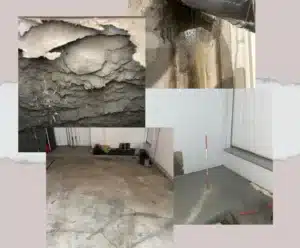


- Water seeping from a small round hole in a poured wall
- Rust-coloured or white staining running down from that spot
- A damp ring that returns after every heavy rain
- Active dripping during or shortly after a storm
- A patch that has cracked, shrunk or fallen out
- A crack running through one of the holes
- A stain on drywall, trim or flooring in a finished basement
Rod Hole Repair in Southeastern Michigan
A Wall That Was Dry for Fifteen Years, and Now Isn’t
Poured Concrete Foundations — Residential, Commercial & Industrial
A dark ring on the basement wall about a foot off the floor. A rusty streak running down the concrete from a spot the size of a nickel. A damp patch that shows up after heavy rain and dries out a few days later.
Nothing about the wall has changed. No new crack, no settlement, no bowing. The hole was always there. The patch over it finally gave up.
Rod holes are a byproduct of the forming process used to build a poured concrete foundation. They go clean through the wall, and the patch a builder skims over them is the only thing standing between wet soil outside and your basement inside.
Call Now: 586-465-5500 or Request a Free Assessment Online
What a Rod Hole Actually Is
When a poured wall is formed, two form walls are set at the thickness the wall needs to be. Wet concrete pushes hard against them, and steel tie rods running through the middle hold those forms together and keep them from blowing out while the pour goes in.
Once the concrete cures and the forms come off, the rods are pulled back out. That leaves a hole roughly five-eighths of an inch across, running the full thickness of the wall. Nothing is left inside it.
The wall company patches those holes, then applies dampproofing or waterproofing over the outside of the wall. The trench is backfilled and the wall looks finished.
It is not a defect. The holes are simply how a poured wall gets built. The only question is whether those original patches are still doing their job.
Not every poured wall has rod holes
Poured foundations are formed using different tie systems, and they do not all leave the same thing behind. Walls formed with tie rods have the round holes described here. Other forming systems leave a different mark, and those are a different repair.
Poured concrete walls only
Rod holes only occur in poured concrete foundation walls. If your basement walls are concrete block, you are looking at a different problem — but it is still one we handle. Depending on where the water is entering, that usually points toward interior drain tile or exterior foundation waterproofing. A free on-site assessment will identify which applies.
How to Tell a Rod Hole From Anything Else
Rod holes are a product of how the wall was formed. The tie rods were placed at set intervals, so the holes they leave follow a pattern — and that pattern is how you identify them.
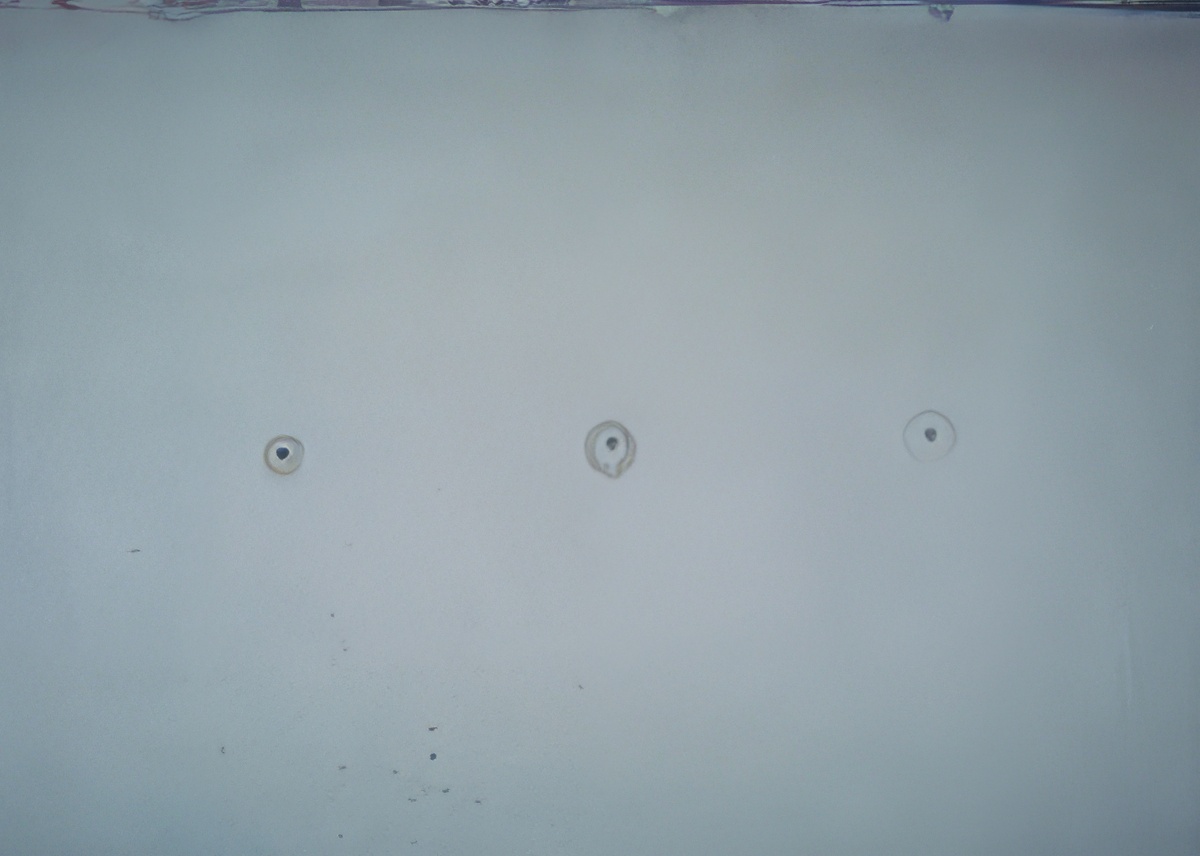
- Roughly 18 inches apart along the wall
- Set out in horizontal rows. There are always at least two, and depending on the finished height of the foundation wall there can be three or four
- The lowest row sits about a foot off the floor
- The rows line up around the entire basement
- At some corners they can sit only a couple of inches apart, depending on the forms used
- Each one is a round divot about the size of a nickel, and you can put a fingertip in it
That is the difference between a rod hole and a crack. A crack can appear anywhere in the foundation. Rod holes only appear where the rods were, which is why they repeat across the wall in even rows.
Foam pushed into the holes is not a repair
On a bare wall, one with no white spray coating or paint over it, you will sometimes see foam sticking out of the rod holes. That is ordinary canned gap-filling foam, sprayed in by the builder or the wall company.
That product was never made to hold back water. At best it is a band-aid, and it will eventually leak.
This is not to say foam cannot seal a rod hole. The polyurethane foams used for waterproofing are formulated for the job and perform very differently from a can of gap filler off a shelf.
What a leaking rod hole looks like
Why Rod Holes Start Leaking
Nothing in the wall changes. The patch does.
Original patch material shrinks as it ages, and Michigan freeze-thaw cycling works at it season after season until it cracks, loosens or falls out. Behind it is a hole that runs straight through the wall, and it was always there.
That is why a basement can stay dry for fifteen years and then start leaking in a spot with no crack anywhere near it.
The clay-heavy soils across Southeastern Michigan make it worse. Clay drains slowly, so after a long rain or a spring thaw the water sits against the foundation instead of moving away from it. That standing water is under pressure, and an open rod hole is the easiest way through the wall.
Why a surface patch comes back
A patch skimmed over the face of the wall is only holding water at the surface. It is not sealing the hole. Once it shrinks or cracks, the water is straight through again, which is why the same spot leaks a second and third time.
When a crack runs through a rod hole
Sometimes a crack in the wall runs directly through a rod hole. This is the situation people most often pay to fix twice.
Plugging the hole on its own will not stop it. The hole gets sealed, the crack stays open, and water arrives through the crack instead — often at the same spot, which makes it look like the repair failed.
Both have to be addressed. The crack is injected and the rod hole is filled. Two repairs in one location, because there are two paths.
Seeing a Wet Spot You Can’t Explain?
A quick look at the wall will tell you whether the holes are the source, whether any of them have cracks running through them, and which ones actually need repair.
Call Now: 586-465-5500 or Request a Free Assessment Online
How We Seal a Rod Hole
Rod holes are sealed from inside the basement. No excavation, no digging up landscaping, no disturbing the yard.
Most holes are plugged. Where access is tight and a plug cannot be seated properly, the hole is injected with a polyurethane foam formulated specifically for waterproofing.
What the repair involves
- The old failing patch is removed first, so the new seal bonds to sound concrete rather than to whatever is left of the builder’s material
- The hole is sealed through its depth, not skimmed over at the surface
- The seal stays flexible, so seasonal movement in the wall does not crack it open again
This is not a surface patch
The hole itself is sealed inside the wall. What you can see afterward is only the finished face of the repair — underneath it, the hole is plugged through its depth.
Our finished repair can look similar to a wall where somebody simply smeared patch material over the opening and left the hole behind it. From the outside they are hard to tell apart. The difference is what is underneath, and that is the part that decides whether it leaks again.
Not Sure Whether Yours Need Repair?
Call Now: 586-465-5500 or Request a Free Assessment Online
Rod Holes That Need Repair — and Ones That Don’t
Not every rod hole needs to be repaired, and we will tell you which ones on your wall actually matter.
Rod holes above grade usually need nothing
Where a rod hole sits above the soil line, there is no ground water pressure behind it. Those generally do not need repair.
This comes up most on a walkout basement, or any house where the grade tapers down toward the back. On those walls the upper row can sit above grade for a good part of its length.
A row of untouched holes above grade is not a problem waiting to happen. Quoting them would be selling you a repair you do not need.
Rod holes below grade are the ones that leak
Below the soil line, every rod hole has saturated ground on the other side of it. After heavy rain or during spring thaw, that water is under pressure and looking for any opening.
These are the holes worth sealing — and they are worth sealing before the water finds finished space, flooring or stored belongings.
One hole or many
Some calls are a single leaking rod hole. Others are rod holes alongside crack repair or a wider waterproofing problem. Both are normal, and both get quoted the same way — after looking at the wall.
Want Someone to Look at It Before You Guess?
Call Now: 586-465-5500 or Request a Free Assessment Online
Why Choose Suburban Basement for Rod Hole Repair
At Suburban Basement Waterproofing, a rod hole repair starts with working out which holes are actually leaking and why. A wall can have dozens of them. Usually only a few matter.
A stain means it has leaked
If a rod hole is stained, water has come through it at some point. It is dry today because conditions have not lined up lately — but it has the ability to leak again given the right ones. How much rain falls, which direction it comes from, a sprinkler running against that side of the house, or snow melting off in spring.
Grading the soil away from the house and extending the downspouts both help, and both should be done regardless. They can slow a leaking rod hole down. What they cannot do is seal it.
Walls do not seal themselves
A wall that has leaked does not repair itself over time. If it did, nobody would need a waterproofer. A dry stain is a record of water finding its way in, and the path it used is still there.
We are not a dealer for anybody’s system
Most of the large waterproofing companies in this market are franchises or dealer networks, which means every recommendation routes back to the one product line they are licensed to sell. We are independent. Plugging, polyurethane injection, crack repair, drain tile, exterior excavation — we install all of them, so the recommendation is based on what the wall needs.
Sometimes that means telling you a rod hole is not your real problem.
- Repair method chosen per hole, not per product line
- We identify which holes actually need work
- Sealed from inside — no excavation
- Cracks running through holes addressed properly
- Over 20 years on Southeastern Michigan foundations
Experience the Suburban Basement Difference
Call Now: 586-465-5500 or Request a Free Assessment Online!
Suburban Basement
Locally OwnedIndependently OperatedLicensed & InsuredFor Over 20 Years
Serving: Southeastern Michigan
- Macomb County
- St. Clair County
- Oakland County
- Lapeer County
- Wayne County
- Call: 586-465-5500
Leaking Rod Hole?
We’re here to help. Get your free assessment today.
Frequently Asked Questions
What is a rod hole?
A hole left in a poured concrete foundation wall where a steel tie rod ran through during the pour. The rods hold the two forms together and keep them from blowing out under the pressure of the wet concrete. Once the concrete cured and the forms came off, the rod was pulled out, leaving a round hole about five-eighths of an inch across running through the wall. The builder patches the surface.
Does every poured foundation have rod holes?
No. Poured walls are formed using different tie systems, and they do not all leave the same thing behind. Walls formed with tie rods have the round holes described here. Other forming systems leave a different mark and need a different repair. If you are unsure which you have, the shape and spacing tell you.
My walls are block, not poured. Do I have rod holes?
No. Rod holes only occur in poured concrete walls. A concrete block wall is built differently and leaks through different paths.
Why is my wall leaking now when it was dry for years?
Nothing in the wall changed. The patch did. Original patch material shrinks, and Michigan freeze-thaw cycling works at it season after season until it cracks or falls out. Behind it is a hole that goes straight through the wall, and it was always there.
How do I know it is a rod hole and not a crack?
Unlike a crack, which can appear anywhere in the foundation, rod holes are only ever where the tie rods went — placed at set intervals when the wall was formed. That is why they follow a pattern. They run roughly 18 inches apart along the wall, in horizontal rows that line up around the whole basement, with the lowest row about a foot off the floor. How many rows there are depends on the height of the wall, commonly three or four. If the water is coming from a round divot the size of a nickel and you can find others evenly spaced beside and above it, it is a rod hole.
Do rod holes above grade need to be repaired?
Usually not. Without soil against the wall there is no ground water pressure behind them. This comes up most on walkout basements and houses where the grade drops toward the back. We will tell you which holes on your wall actually need attention.
The hole is stained but it is dry right now. Is it still a problem?
Yes. A stain means water has come through it. It is dry today because conditions have not lined up recently, not because it healed. It can leak again given enough rain, rain driving against that side of the house, a sprinkler running near the wall, or snow melting in spring. Walls do not seal themselves.
Someone sprayed foam into my rod holes. Is that a repair?
Not if it is the canned gap-filling foam sold for sealing around pipes and windows. That is usually what gets sprayed in by the builder or the wall company, and you see it most on bare walls with no coating or paint over them. It was never made to hold back water and it will eventually leak.
Polyurethane foam itself is not the problem. The foams used for waterproofing are formulated for that purpose and behave very differently. We inject one of those where a hole is too tight to plug properly.
I regraded the soil and extended my downspouts. Will that fix it?
Both are worth doing regardless, and both can slow a leaking rod hole down. Neither one seals it. The path through the wall is still open, so when conditions line up again the water uses it.
There is a crack running right through one of my rod holes.
Then plugging the hole alone will not stop the leak. The crack is a second path and stays open after the hole is sealed. The crack has to be injected and the rod hole filled, two repairs in one spot, because there are two ways in.
Why do rod hole patches fail?
Because a surface patch only holds water back at the face of the wall. It is not sealing the hole through its depth. Once it shrinks or cracks, the water is straight through. A repair that lasts has to remove the failed material and seal the hole itself rather than skim over it again.
Can I just patch it myself with hydraulic cement?
You can, and it will often hold for a while. The reason it comes back is the same reason the builder’s patch came back. Surface material over an open hole is a temporary answer to a permanent path.
Do you have to dig up my yard?
No. Rod holes are sealed from inside the basement. There is no excavation and no landscaping disturbed.
How long does the work take?
Most rod hole work is finished the same day. What changes the timing is the number of holes and whether any cracks need injecting at the same time.
Can you repair just one rod hole?
Yes. Some calls are a single leaking hole, others are rod holes alongside crack repair. Both are normal and we quote either.
Will the repair be visible afterward?
There will be a small sealed spot where the hole was. On an unfinished wall it is visible if you look for it, and it can be painted over once cured.
Is a leaking rod hole a structural problem?
The hole itself is not structural. It is a water path, not a crack under load. What matters is what the water does over time to finished space, flooring and anything stored against the wall.
How much does rod hole repair cost?
Cost depends on how many holes are leaking, whether any have cracks running through them, and access to the wall. Rod hole work sits at the smaller end of foundation repair. We give a firm price after looking at the wall, and assessments are free.
Rod Hole Glossary
Rod Hole
The hole left through a poured concrete foundation wall once the tie rod is pulled out. Round, roughly five-eighths of an inch across, running the full thickness of the wall. This is what leaks.
Tie Rod
The steel rod itself. It runs through the wall cavity during the pour to hold the forms together and keep them from blowing out under the pressure of the wet concrete, then gets pulled back out once the concrete cures.
Poured Concrete Foundation
A foundation wall formed and cast in place as one continuous piece, as opposed to one built from concrete block. Rod holes only occur in poured walls.
Forms
The temporary walls concrete is poured between. Removed once the concrete has cured.
Grade
The level of the soil against the outside of the foundation. Wall below grade has soil and water pressure against it. Wall above grade does not.
Above Grade
The portion of a foundation wall sitting above the surrounding soil line. Rod holes here generally do not need repair.
Below Grade
Any part of the structure below the surrounding soil level, where ground water pressure acts against the wall.
Walkout Basement
A basement where the grade drops away on one side far enough for a door at basement level. Often leaves part of the wall, and its rod holes, above grade.
Hydrostatic Pressure
Pressure from water in saturated soil pushing against the foundation. What drives water through any opening in a below-grade wall.
Freeze-Thaw Cycling
Repeated freezing and thawing through a Michigan winter, which expands and contracts materials and works old patches loose over time.
Efflorescence
The white, chalky mineral deposit left on concrete where water has passed through and evaporated. A sign water has been moving through that spot.
Plug
Sealing a rod hole by filling it through its depth, as opposed to skimming a patch across the face of it.
Polyurethane Injection
Sealing by injecting a polyurethane foam formulated for waterproofing into the opening. Used on rod holes where access is too tight to seat a plug properly, and on cracks running through a wall. Not the same as ordinary canned gap-filling foam.
Cove Joint
The joint where the foundation wall meets the basement floor. A separate leak path, sometimes confused with a low row of rod holes.
Negative Side
The inside face of a foundation wall, opposite the soil. Rod hole repairs are performed from the negative side.
Form Tie
The general category of hardware used to hold concrete forms together during a pour. A tie rod is one type; other systems leave different marks in the finished wall.
Articles & Case Studies