

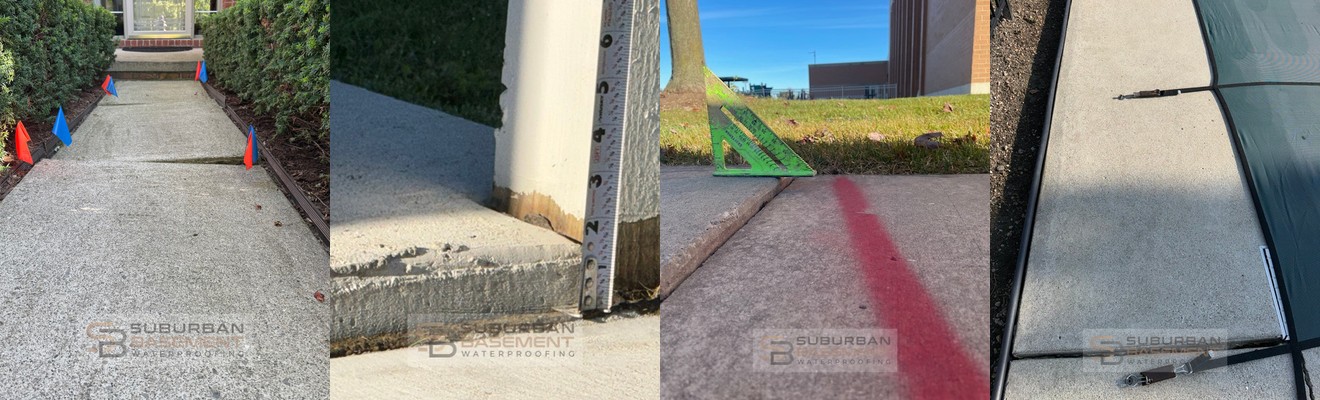
Sunken residential walkway before concrete leveling — Rochester Hills, Oakland County MI

Dealing with Uneven, Sinking, or Trip-Hazard Concrete?

Don't Replace It, Raise It!

Polyurethane Foam Concrete Leveling in Southeastern Michigan

Trusted solutions for homeowners, commercial properties, and industrial facilities.

Concrete leveling with polyurethane foam provides a fast, reliable, and minimally disruptive solution for lifting and stabilizing sunken concrete slabs. Whether you’re dealing with uneven sidewalks, sinking driveways, or structural slab settlement, our team delivers precise repairs designed for Michigan soil conditions.


Instead of tearing out and replacing concrete, polyurethane foam injection lifts and supports existing slabs from below, restoring safety, appearance, and long-term performance with minimal downtime.

Polyurethane foam concrete leveling provides a clean, fast, and long-lasting way
to lift and stabilize uneven slabs with minimal disruption.

See How Polyurethane Foam Concrete Leveling Works in Real Michigan Conditions

Watch how our polyurethane foam lifts, stabilizes, and restores concrete slabs in real Michigan soil conditions.

Dealing with settled slabs or trip hazards on your property?

Our team will evaluate your concrete and recommend the safest solution.

What Is Concrete Leveling?

Concrete leveling is a non-invasive repair method that lifts and stabilizes sunken concrete by injecting expanding polyurethane lifting material beneath the slab. The material fills hidden voids and gently raises the concrete back to its proper position without removal or replacement.


It is commonly used for sidewalks, driveways, patios, garage floors, and other settled concrete surfaces.

What Polyurethane Foam Concrete Leveling Fixes

Polyurethane concrete lifting corrects a wide range of slab settlement problems, including:

Don't Let Uneven Concrete Cause These Problems!

Why Concrete Settles

Concrete settles when the soil beneath it loses strength or support. This commonly occurs due to soil erosion, poor compaction, moisture changes, and Michigan’s freeze-thaw cycles. Over time, these conditions create underground voids that allow slabs to sink, shift, or crack.


Heavy clay soils, fluctuating groundwater levels, and surface water runoff all contribute to slab movement. Without proper stabilization, settlement can worsen and spread to adjacent concrete sections. This is especially common in Southeastern Michigan where clay-heavy soils and freeze–thaw cycles accelerate settlement.

How Our Polyurethane Concrete Leveling Works

Our polyurethane concrete leveling process lifts and stabilizes concrete by injecting expanding foam beneath the slab to fill voids and restore support. The process is fast, controlled, and typically completed in a single visit.


The Process:

  1. Small injection ports (3/8 inch in diameter) are drilled into the concrete surface
  2. Expanding polyurethane foam is injected beneath the slab
  3. The foam fills voids, compacts soil, and lifts the slab
  4. The injection points are patched and the area is ready for use within 30 minutes


Technical Benefits:

  • Strengthens weak or eroded soils
  • Forms a closed-cell, water-resistant base
  • Improves load-bearing performance
  • Lightweight material that won’t overburden soil
  • Cures quickly compared to traditional mudjacking
  • NSF/ANSI 61 certified for contact with potable water
  • Suitable for residential, commercial, and industrial slabs
  • Suitable for interior and exterior applications

Applications for Residential, Commercial, and Industrial Properties

Polyurethane concrete leveling is a versatile, non-invasive solution used across residential, commercial, and industrial environments to correct settlement, restore safety, and stabilize concrete slabs.

Residential Applications

Common residential concrete leveling projects include:

  • Settled driveways & walkways
  • Uneven patios & porches
  • Sinking garage floors
  • Unlevel pool decks
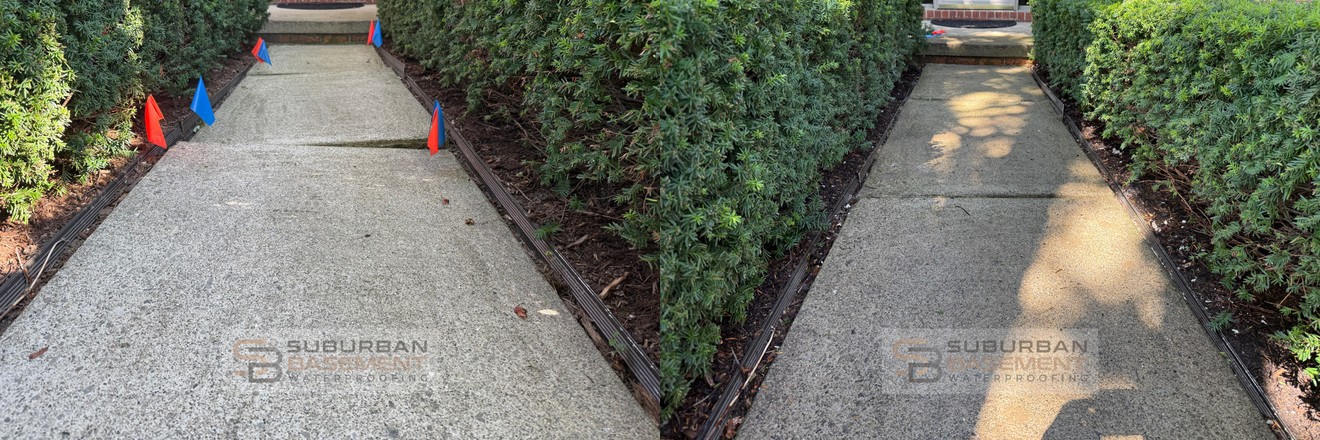
Before and after polyurethane concrete leveling on a front walkway in Rochester Hills, Oakland County MI

Commercial Applications

Concrete leveling solutions commonly used for commercial properties:

  • Settled warehouse floors
  • Uneven storefront & shared sidewalks
  • Unlevel retail & office slabs
  • ADA trip-hazard corrections
  • Perfect for schools, hospitals, and other high-foot-traffic areas
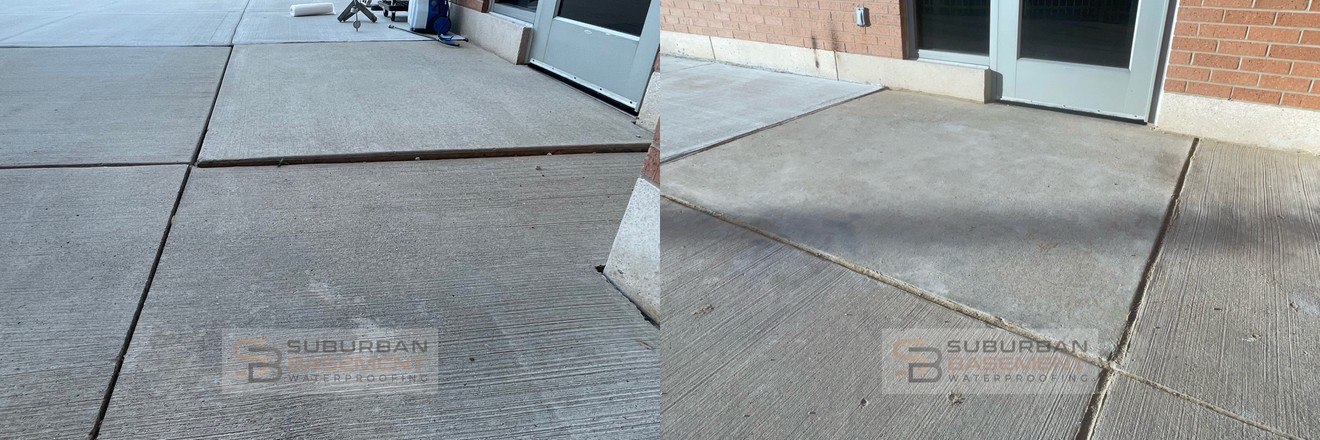
Unlevel school walkway before concrete leveling — Clinton Township, Macomb County MI

Industrial Applications

Polyurethane foam leveling is also used for infrastructure and heavy-load environments such as:

  • Settled utility access slabs
  • Heavy-load slab stabilization
  • Uneven roadway & approach slabs
  • Public sidewalk systems
  • Increase load-bearing capacity without the need to replace the concrete
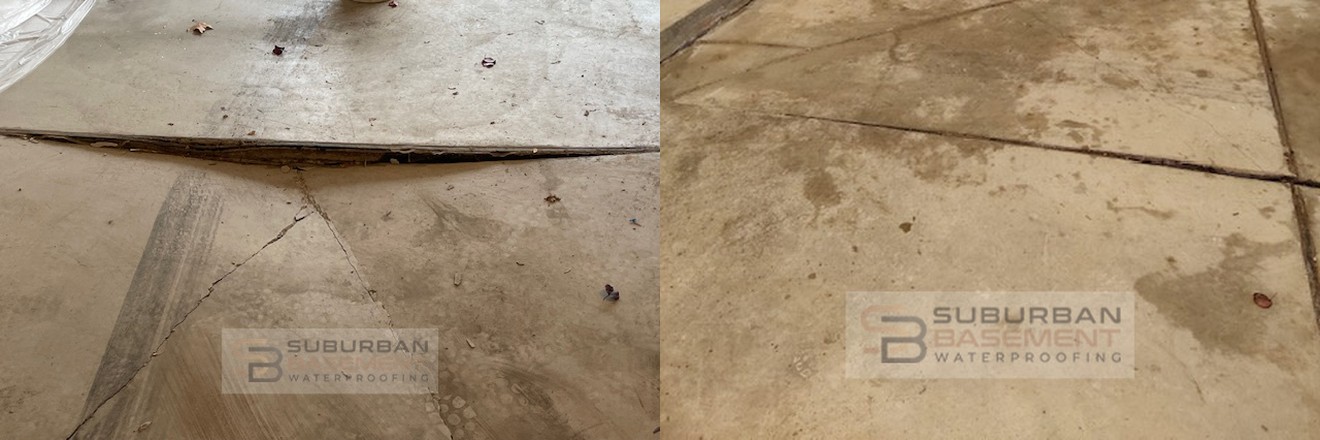
Sunken pool deck before concrete leveling — Macomb Township, Macomb County MI

Why Choose Suburban Basement for Concrete Leveling

Suburban Basement

Locally Owned
Independently Operated
Licensed & Insured
For Over 20 Years

Serving: Southeastern Michigan

Have Uneven Concrete?

We’re here to help. Get your free assessment today.

Frequently Asked Questions

What is polyurethane foam concrete leveling?

Polyurethane foam concrete leveling is a repair process that lifts and stabilizes sunken or uneven concrete slabs without replacing them. We drill small 3/8" holes into the settled slab, inject an expanding two-part polyurethane foam beneath it, and the foam fills the void while gently raising the concrete back to its original level. Once level, the holes are patched and the surface is ready for use within 30 minutes.

How does the concrete leveling process work, step by step?

We start by identifying the settled areas and determining the best injection points. Small 3/8" ports are drilled through the slab, and a two-part polyurethane foam is injected beneath it. The foam expands, fills voids in the soil, compresses loose subgrade material, and lifts the slab back to grade. We monitor the lift in real time for precision. Once level, the ports are patched and the area is cleaned. Most jobs are completed within a few hours.

What concrete surfaces can be leveled?

Polyurethane foam leveling works on virtually any structurally sound concrete slab, including driveways, sidewalks, patios, pool decks, garage floors, porches, steps, interior floors, and commercial or industrial slabs such as warehouse floors and loading docks. We assess each slab during the free estimate to confirm it's a good candidate.

What causes concrete to sink or settle?

The most common causes in Michigan are soil erosion from water runoff, freeze-thaw cycles that shift or compact the subgrade, poor soil compaction during original installation, and voids created by tree root activity or underground water movement. Polyurethane foam injection addresses the root cause by filling voids and stabilizing the subgrade.

How do I know if my concrete needs leveling or replacement?

If your slab is structurally sound but sunken, uneven, or creating a trip hazard, leveling is typically the right solution. If the concrete is severely cracked, crumbling, or broken into multiple pieces, replacement may be necessary. During our free estimate we'll assess the condition of your slab and give you an honest recommendation.

How long does the process take?

Most concrete leveling jobs are completed in 2–4 hours, depending on the size and complexity of the project. In most cases, your concrete is ready to walk or drive on within 30 minutes of completion.

How soon can I walk or drive on the concrete after leveling?

You can walk on the leveled surface within 15–30 minutes of completion. For driveways and areas that need to support vehicle traffic, we recommend waiting at least 30–60 minutes before driving on it.

Will this fix my concrete permanently?

According to the manufacturer, polyurethane foam concrete leveling has a service life of 50+ years. Unlike mudjacking slurry, the foam doesn't wash out, compress over time, or degrade — making it a long-term solution for most slab settlement problems.

Will concrete leveling fix the cracks in my slab?

Leveling stabilizes the slab and stops further cracking caused by settlement. Minor cracks may partially close as the slab is raised back to grade. For significant cracking we recommend sealing them after leveling to prevent water infiltration.

Is polyurethane foam safe?

Yes. The polyurethane foam we use is NSF/ANSI 61 certified, approved for contact with potable water. It's safe for both residential and commercial applications.

Is polyurethane foam leveling better than mudjacking?

For most applications, yes. Mudjacking pumps heavy cement slurry under your slab through 1–2 inch holes and can re-settle as the slurry erodes. Polyurethane foam is lighter than water, expands precisely to fill voids, and uses small 3/8-inch drill holes. You can use the surface within 30 minutes versus 24+ hours for mudjacking.

Can you level concrete in the winter?

Interior concrete leveling — garage floors, basement floors, and other indoor slabs — can be performed year-round. Exterior work such as driveways, sidewalks, and patios is seasonal. Cold temperatures and frozen ground affect the subgrade in ways that prevent a proper, lasting lift. We schedule exterior projects during the warmer months.

Do you offer a warranty on concrete leveling?

Yes — we stand behind our work. Ask us about our warranty coverage when you schedule your free assessment. We use high-quality polyurethane foam materials and take the time to do the job right.

Will the leveling process affect my landscaping or surrounding structures?

No. Polyurethane foam leveling is minimally invasive — no heavy equipment, no demolition, no excavation. The small 3/8" drill holes are patched when complete. The foam is lightweight and environmentally inert.

Can you level stamped or decorative concrete?

Yes. Because the foam is injected beneath the slab, the surface texture, color, and pattern are not disturbed. Leveling is often the preferred option for decorative concrete — replacement would require matching the original color and stamp pattern, which is difficult and costly.

Is DIY concrete leveling an option?

Consumer-grade leveling products rarely achieve the precision needed for safe, lasting results. Proper concrete leveling requires commercial-grade foam, calibrated injection equipment, and experience to control the lift accurately. For a repair that holds, professional service is the right call.

Concrete Leveling Glossary​
Heave / Frost Heave:

Upward movement of a concrete slab caused by soil expansion, frost pressure beneath the surface, or encroaching tree roots. In Michigan, frost heave is common during freeze-thaw cycles when moisture in the subgrade freezes, expands, and pushes slabs upward. Concrete lifted by frost heave often settles back unevenly as temperatures rise.

Downward movement of a concrete slab caused by weakening of the soil beneath it. Settlement occurs when subgrade soil erodes, compresses, or is washed away — leaving voids that can no longer support the slab’s weight. Common in Michigan due to clay-heavy soils and seasonal ground movement.

The angle of a concrete surface relative to level. Slope correction is the process of restoring the proper drainage angle to a slab that has settled, causing water to pool where it shouldn’t or directing runoff toward a structure. Polyurethane foam lifts can re-establish correct slope without tearing out and re-pouring concrete.

Empty spaces that form beneath a concrete slab when the underlying soil erodes, washes out, or compresses over time. Voids leave the slab unsupported, causing cracking, sinking, and settlement. Void filling is the process of injecting expanding polyurethane foam to fill these spaces, restore structural support, and prevent further movement.

Horizontal shifting of a concrete slab, typically caused by soil pressure, frost, tree root intrusion, or water movement. Unlike vertical settlement, lateral movement shifts slabs sideways, creating gaps, misalignment, or separations between adjacent panels. Our technicians assess lateral movement when determining the best stabilization approach.

The process by which an injected material hardens and reaches its full structural strength. Mudjacking slurry typically requires 24–48 hours to cure before the surface can be used. Polyurethane foam cures within minutes — most surfaces are ready for foot and vehicle traffic within 30 minutes of application.

The process of filling and patching the small injection ports after concrete leveling is complete. Ports used in polyurethane foam leveling are 3/8 inch in diameter and are patched flush with the concrete surface after injection, leaving a minimal footprint. Sealing can also refer to applying surface sealant to protect concrete from moisture penetration and freeze-thaw damage.

A deliberate gap built into concrete construction to allow slabs to expand and contract with temperature changes without cracking. Properly functioning expansion joints prevent stress fractures and allow natural slab movement. Damaged or clogged expansion joints can contribute to cracking and uneven slab movement. Sealing expansion joints protects them from moisture infiltration and debris.

A traditional method of lifting sunken concrete by pumping a cement-sand slurry beneath the slab through 1–2 inch drill holes. Mudjacking adds significant load to already weakened soil and can re-settle over time as the slurry erodes, dries, or compresses. Also called slabjacking. Requires 24–48 hours of cure time before the surface can be used.

The industry term for polyurethane foam concrete leveling. Expanding structural foam is injected beneath the slab through small 3/8-inch drill holes, filling voids and lifting the concrete with precision. Polyjacking foam is lighter than water, cures within minutes, and has a manufacturer-rated service life of 50+ years — significantly lighter and longer-lasting than traditional mudjacking slurry.

CONCRETE LEVELING PHOTOS
MORE WORKS

Similar Projects