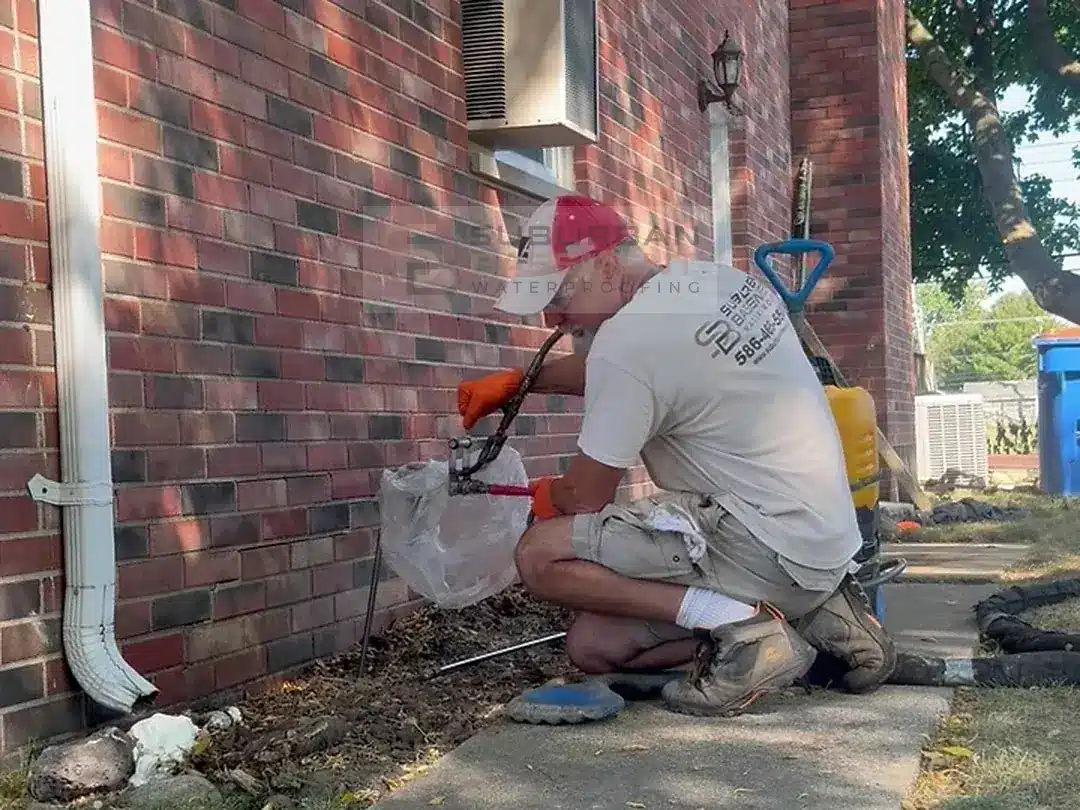
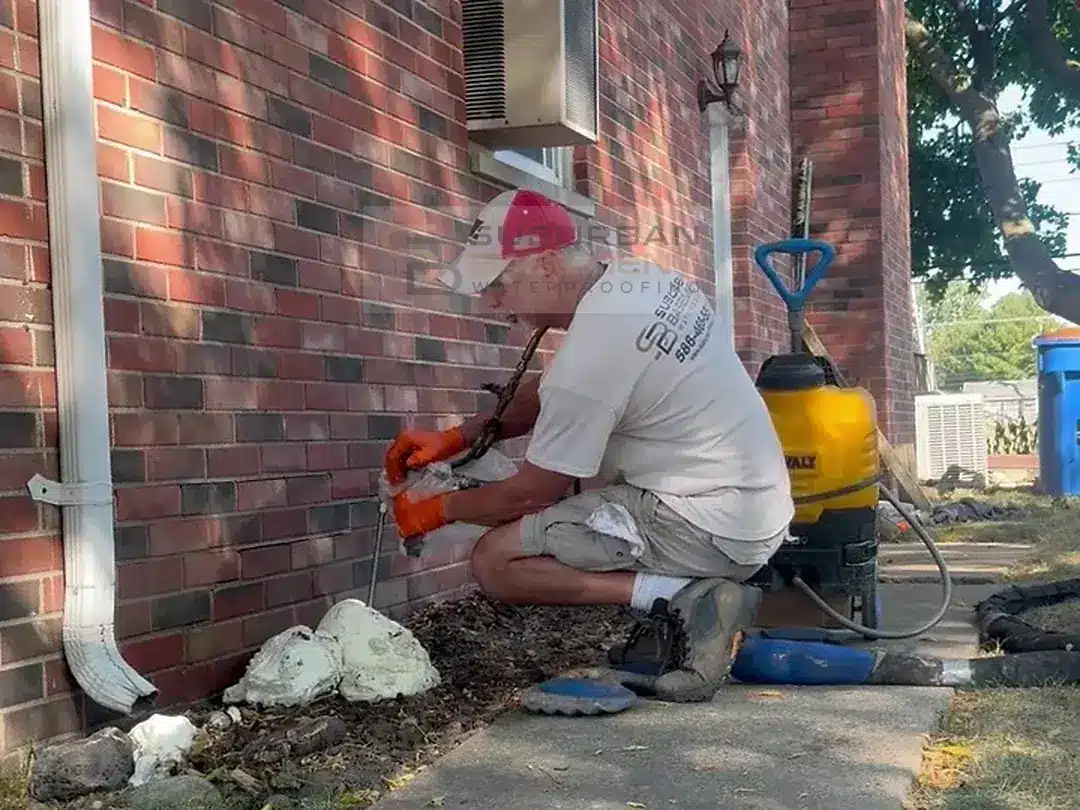
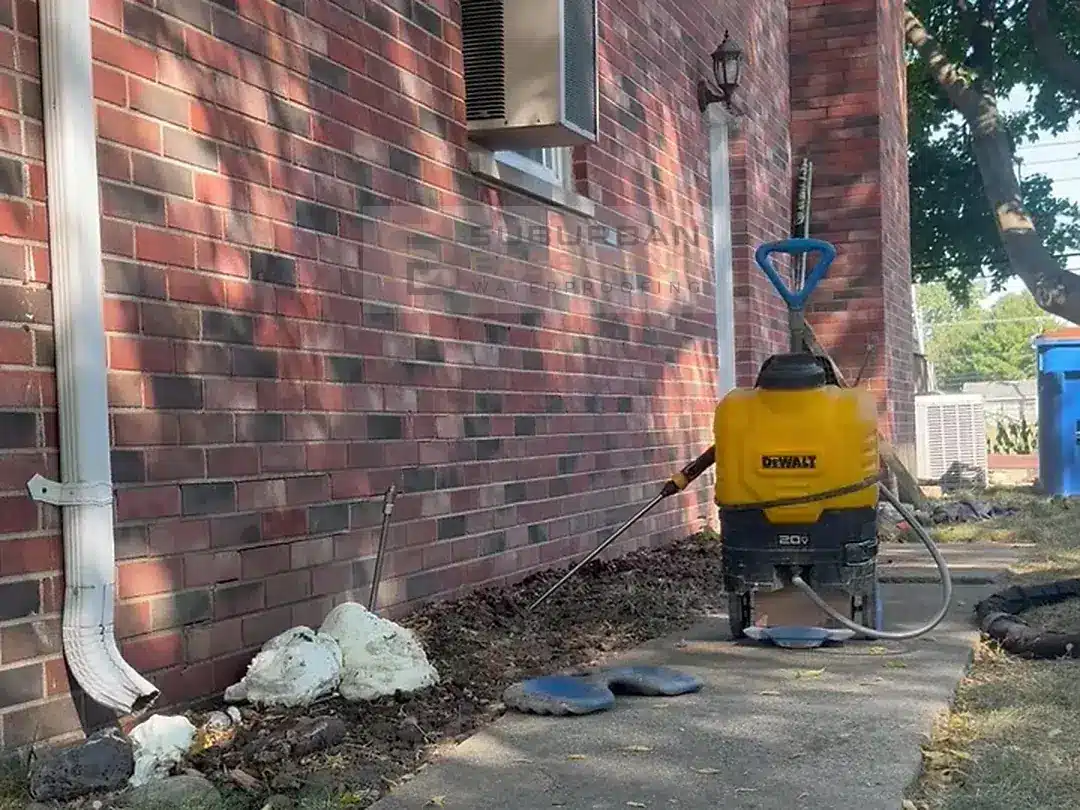
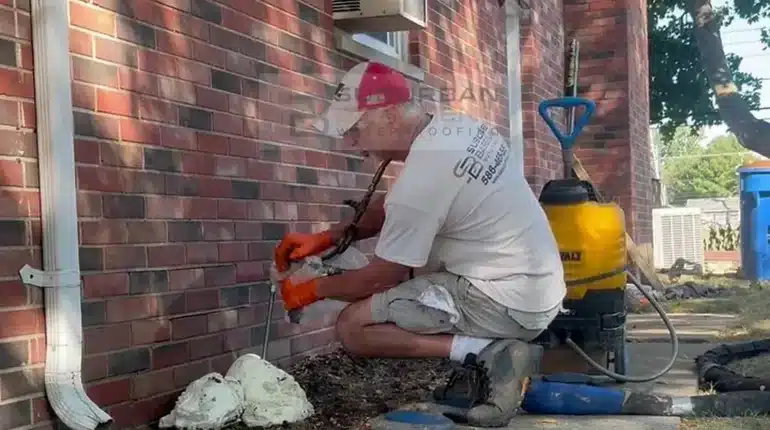
Technician injecting through a lance while foam builds up at the base of a brick garage wall during deep injection in Warren MI

Deep Injection Soil Stabilization and Concrete Leveling in Warren, MI

A Two-Phase Repair: Stabilizing the Soil Beneath the Footing, Then Restoring the Garage Floor and Entryway to Level

The soil got stabilized first. The garage slabs, curb and entryway came after that.

At a Glance

  • Location: Warren, Michigan
  • Problem: The right side of the garage was beginning to sink, and the garage slabs, curb and entryway were settling
  • Likely cause: A nearly 30-year-old oak tree alongside the garage, its canopy covering most of the garage
  • Trip 1: Deep injection soil stabilization along the right side of the garage. Lances every 4 feet, two depths per site
  • Trip 2: Interior garage slabs and the garage curb, void filled, leveled and gap closed. Garage entryway slabs, leveled
  • The oak tree: Removed after our work was finished

The Call

A homeowner in Warren called Suburban Basement Waterproofing about their garage. The right side of it was beginning to sink.

What We Found

A giant oak tree, close to 30 years old, next to the right side of the garage. Its canopy covered most of the garage. A tree’s roots generally spread at least as far as its canopy, so its roots most likely ran underneath the garage footing and underneath the garage floor. We did not see them there, but we did see roots coming up above ground heading directly toward the garage, and while driving the lances we hit roots in many spots and had to readjust them.

From what we could tell, that root system was drawing most of the moisture up out of the soil, and that loss of moisture was causing the foundation to shift and settle.

The oak tree is the presumed cause, not a proven one. You cannot excavate a whole garage to prove a root system’s moisture draw. What we could see was a mature oak tree immediately alongside with its canopy over most of the garage, roots coming up above ground heading directly toward the garage, roots we hit while driving the lances, and settlement concentrated on that side of the property. We did not uncover the roots under the footing or the floor.

The entryway had one more thing going on. Its expansion joints had never been sealed, so water had been getting in between the slabs and causing erosion underneath.

What We Did — In This Order

Trip 1 — Deep injection to stabilize the garage

The first trip was the soil, not the concrete.

Deep injection was the most cost-effective option here. The owner was looking to stabilize the garage — not to lift it back into its original position.

Deep injection is a trenchless method. Injection lances are driven below grade and expanding structural polyurethane is injected through them into the weak soil, where it permeates loose soil, fills voids left by washout or poor compaction, and compacts the surrounding ground as it expands.

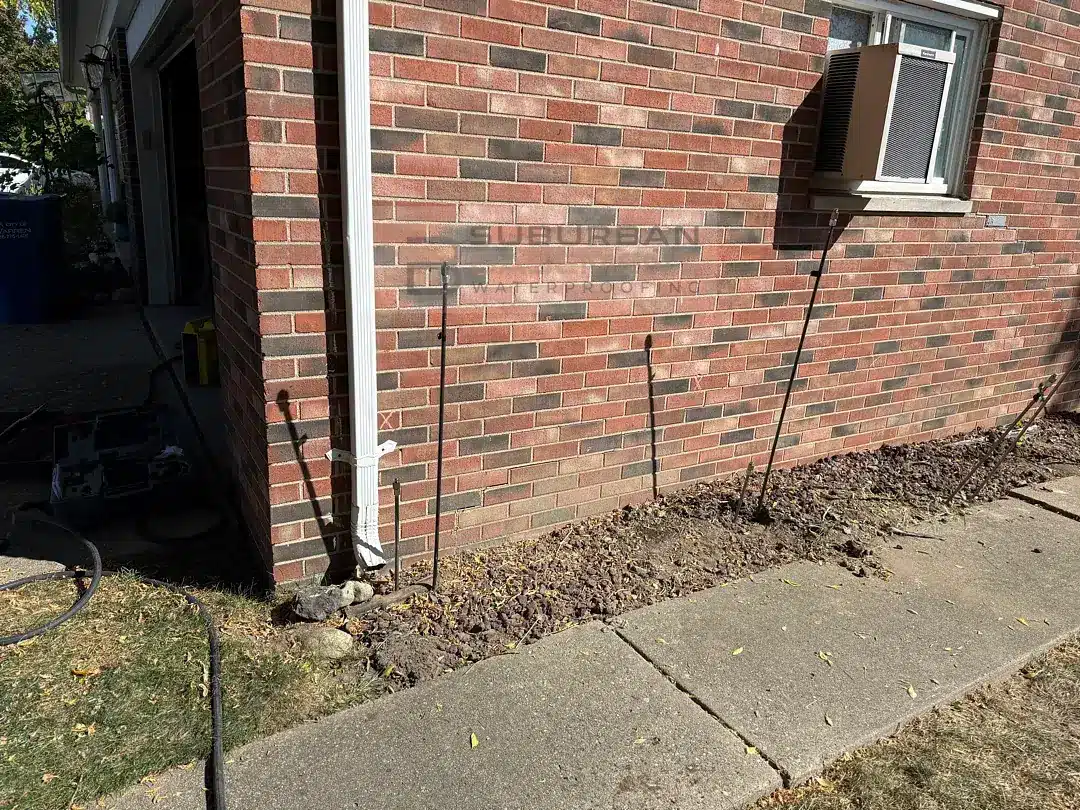
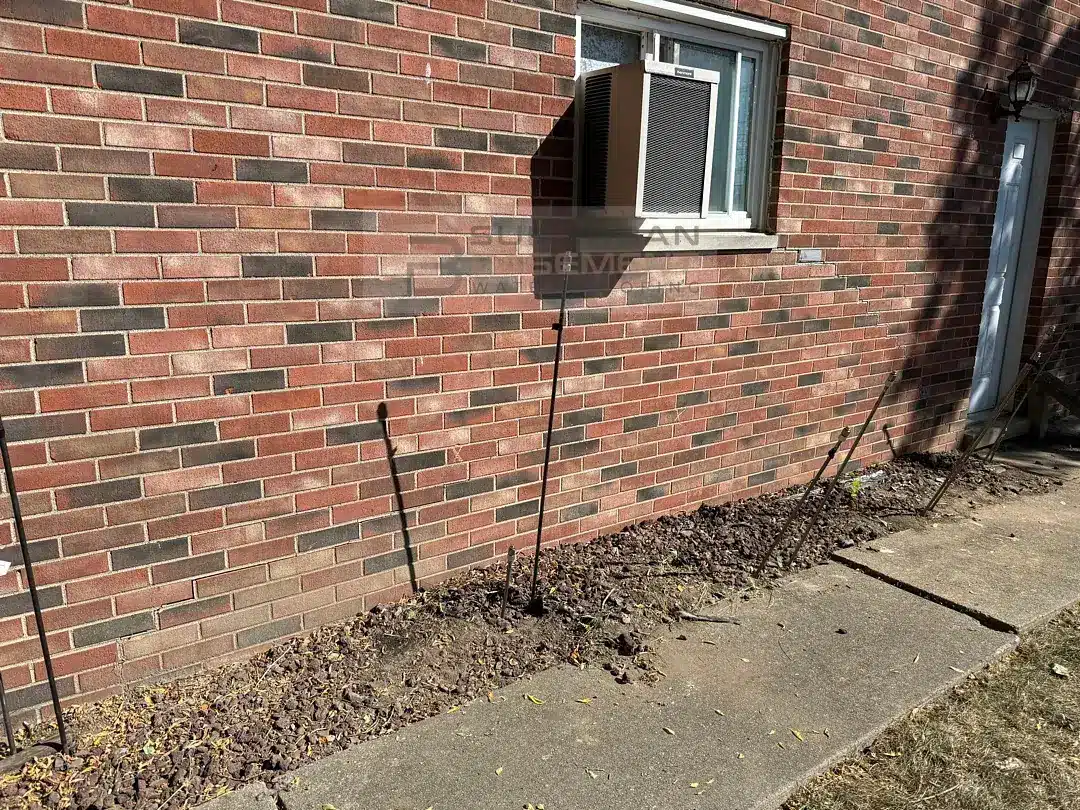
We drove lances approximately every four feet across the entire span of the right side of the garage wall. At each injection site we set two lances at two different depths:

  • A shallow lance, roughly 6 feet
  • A deep lance, approximately 10 to 12 feet

Two depths at one location increases the area of influence of each injection. Injecting at different depths at the same point dramatically increases the load-bearing capacity of poor or weak soil. You are adding a more compacted mass under the structure — and when you extend that compacted mass deeper into the ground, you increase the capacity and stability of both the surrounding soil and the structure sitting on it.

We started at the lowest point — the front of the garage, where it had sunk the most — and worked back toward the rear in sequence, rather than jumping around.

No excavation along the footing. The yard was not opened up.

In many spots we had to readjust the lances because we hit roots while driving them into the ground.

Trip 2 — The interior garage slabs, the garage curb and the garage entryway

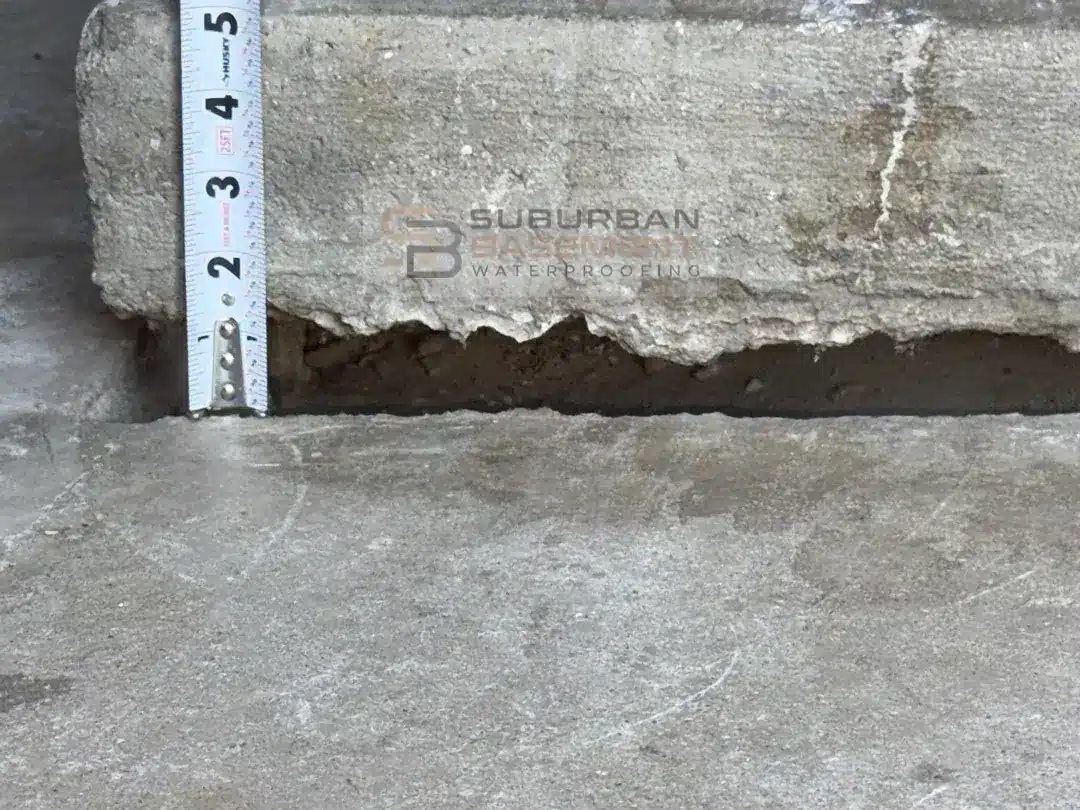
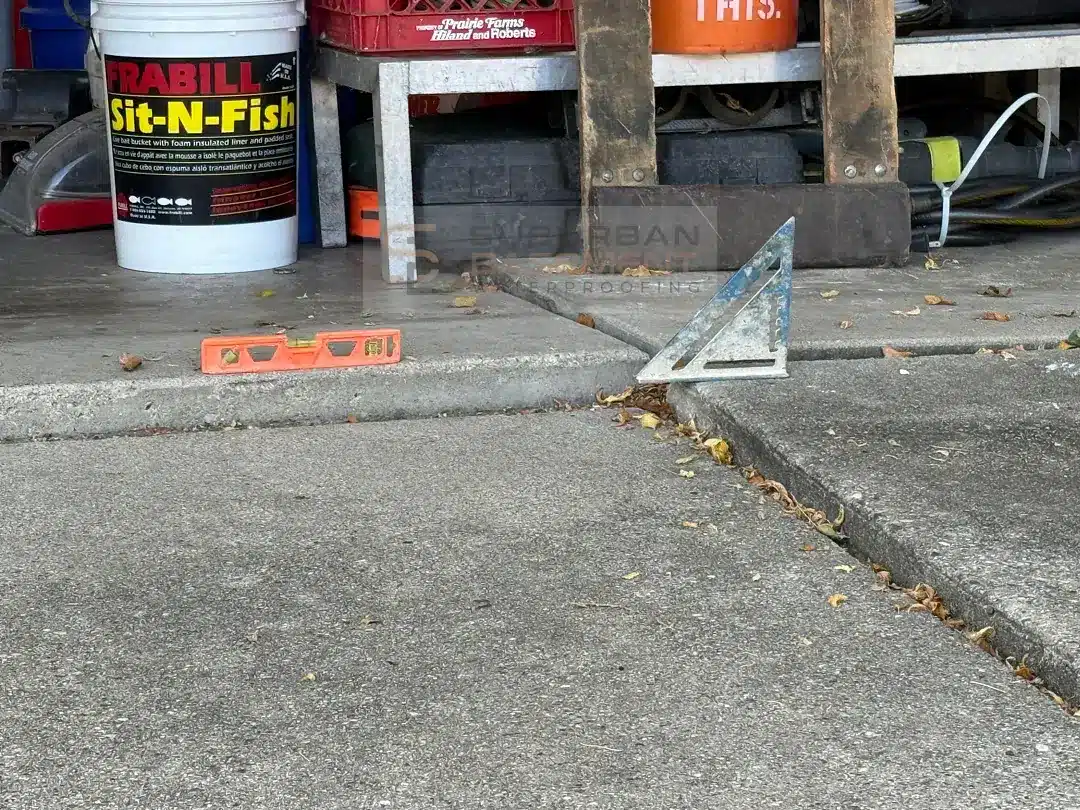
The same tree had the interior garage slabs settling. In spots the slab had dropped away from the garage curb, leaving a gap with bare dirt showing underneath the edge of the curb — roughly two inches of it at the worst point.

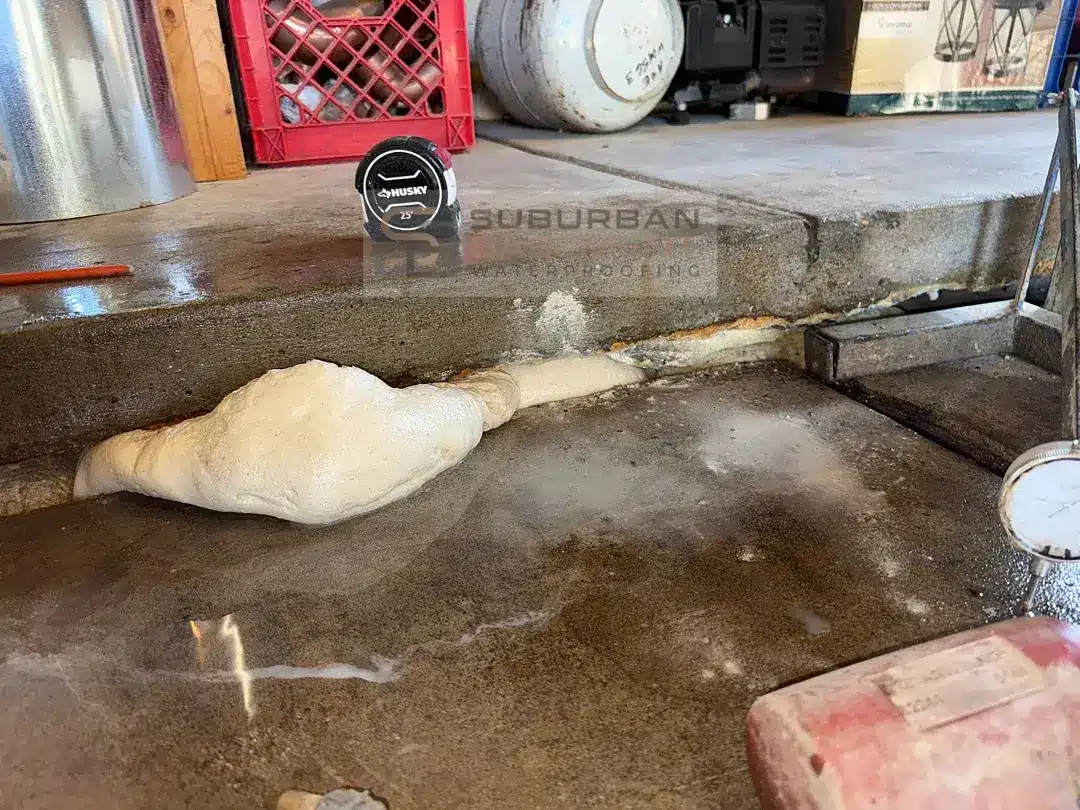
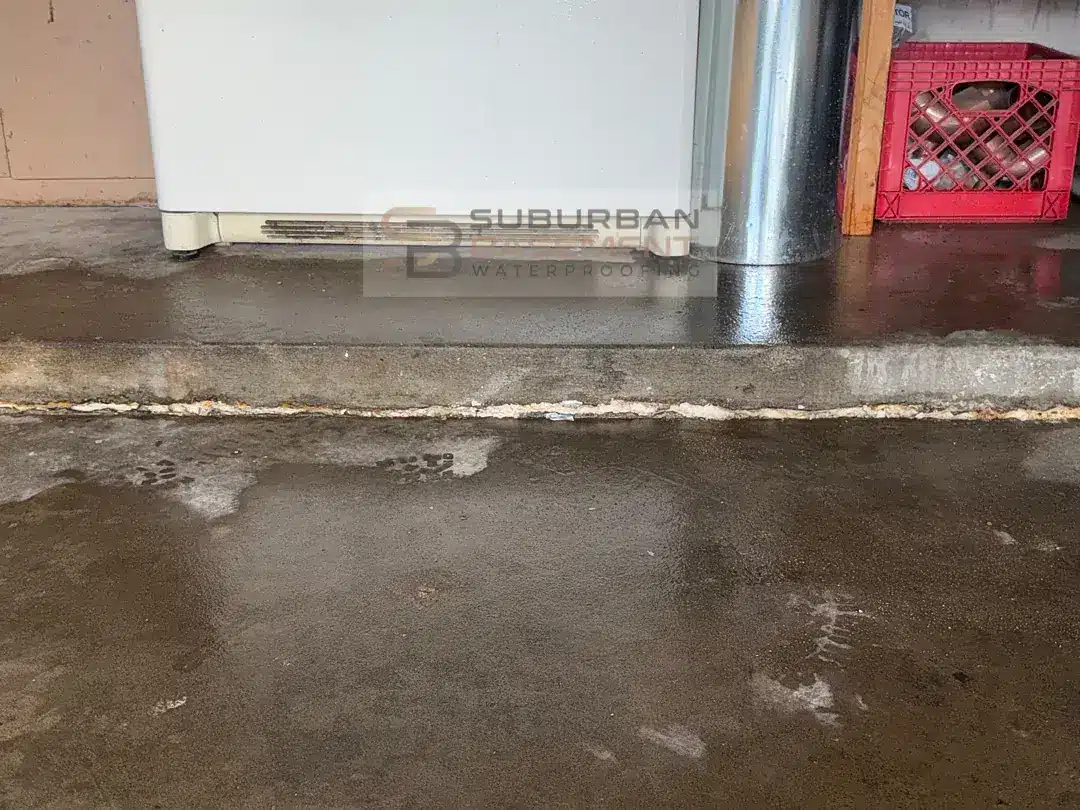
We void filled and leveled the concrete, and closed up the gap between the slabs and the curb.

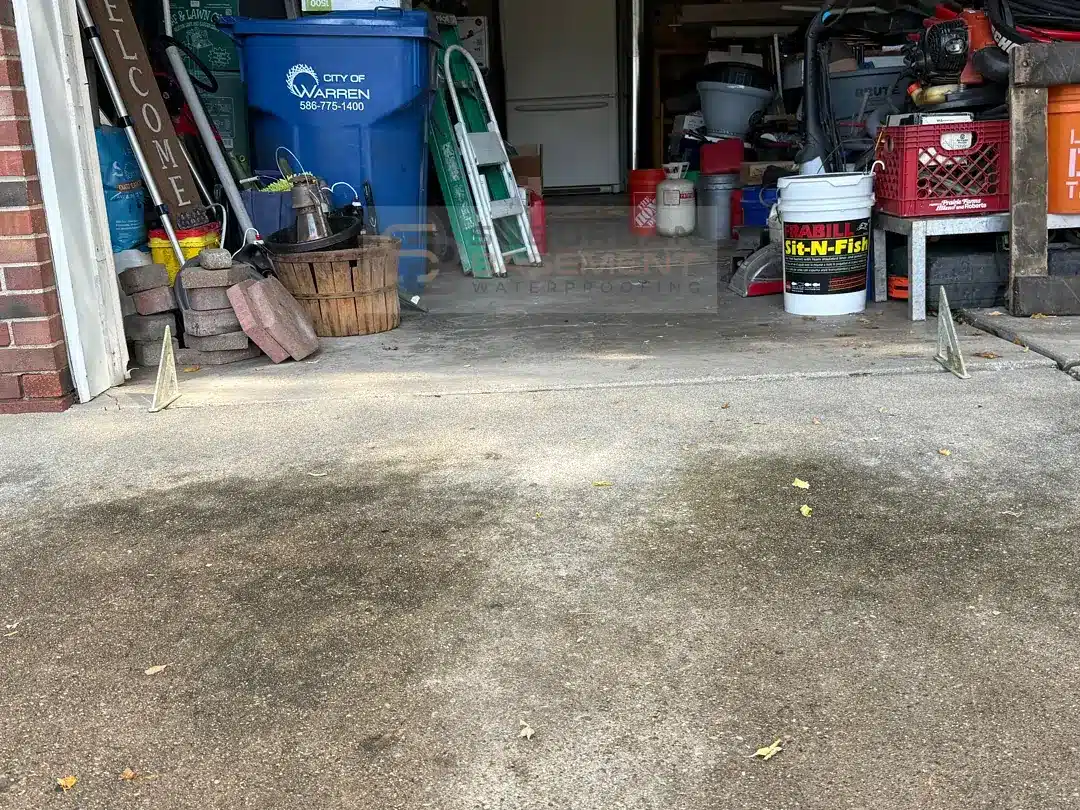
The entryway slabs appeared to have sunk, possibly from the same oak tree’s roots, and also because the expansion joints had never been sealed and water got in between the slabs and eroded what was underneath.

We leveled it.
The Oak Tree

The tree came out after our work was finished.

The Result

Along the right side of the garage, voids and poorly compacted soil beneath the footing are filled and stabilized across the full span of the affected wall. The interior garage slabs are leveled and back up against the garage curb with the gap closed. The entryway is level.

The original concrete stayed in place. Nothing was demolished, hauled away or replaced.

On the deep injection specifically: we never promise a lift. On a settled structure the goal is to stop the movement by treating the soil the footing bears on. That is what this was, and that is what it delivered.

Project Photos

Steel injection lances set along a brick garage wall in Warren MI for deep injection soil stabilization
Injection lances set along the right side of the garage wall in Warren, MI.
Wider view of injection lances set along a brick garage wall in Warren MI before deep injection
A wider view of the injection lances set along the wall.
Technician injecting through a lance at a brick garage wall as the first foam comes up out of the ground during deep injection soil stabilization in Warren MI
Injecting through a lance as the first foam starts to come up out of the ground at the base of the wall.
Technician injecting through a lance while foam builds up at the base of a brick garage wall during deep injection in Warren MI
Injecting through a lance as the foam builds up at the base of the wall.
Foam along the base of a brick garage wall during deep injection soil stabilization in Warren MI
The foam along the base of the wall during deep injection.
Tape measure in the gap under a garage curb where the slab had sunk away in Warren MI before concrete leveling
A gap under the edge of the garage curb where the slab had sunk away, with a tape measure in the gap.
Polyurethane foam visible at the edge of a garage curb during void filling and concrete leveling in Warren MI
Foam visible at the curb edge during void filling and leveling.
Garage curb with the gap closed after concrete leveling and void filling in Warren MI
The garage curb after leveling, with the gap closed.
Settled concrete slabs at a garage entryway in Warren MI before concrete leveling
The garage entryway slabs before leveling.
Leveled concrete slabs at a garage entryway in Warren MI after concrete leveling
The garage entryway slabs after leveling.

Questions From This Job

Can a tree cause a garage foundation to settle?
On this Warren job a nearly 30-year-old oak tree with a canopy over most of the garage most likely had roots running underneath the garage footing and floor, and from what we could tell they were drawing moisture up out of the soil, which caused the foundation to shift and settle. We did not see the roots under the footing, but we hit roots in many spots while driving the lances. We treat that as the likely cause rather than a proven one. The tree was removed after our work was finished.

Why do unsealed expansion joints matter?
On the garage entryway at this house the joints had never been sealed, and water had been getting in between the slabs and eroding what was underneath them.

Why are two injection lances used at each point?
Two depths at one location increases the area of influence of each injection. Injecting at different depths at the same point dramatically increases the load-bearing capacity of poor or weak soil — you are adding a more compacted mass under the structure, and extending that mass deeper into the ground increases the capacity and stability of the surrounding soil and the structure above it. On this garage that was one lance at roughly 6 feet and one at roughly 10 to 12 feet.

Where do you start on a settled structure?
At the lowest point — wherever it has sunk the most — and work out from there. On this garage that was the front, so we started at the front and worked back.

Will deep injection lift the structure back up?
We never promise a lift. The goal is to stabilize the soil beneath the footing so the structure stops moving. On this garage the owner was looking to stabilize it, not to lift it back to its original position.

Does the yard have to be dug up?
No. Deep injection is a trenchless method — the lances are driven below grade and the material is injected through them, so there is no excavation along the footing.

Is One Side, Two Sides, or All Sides of Your Structure Showing Signs of Settlement? Call Suburban Basement Waterproofing

Related Services:

Deep Injection Soil Stabilization — the method used along the garage footing

Polyurethane Concrete Leveling — the lifting process used on the garage slabs, curb and entryway

Concrete Void Filling — filling the empty space beneath a slab

Concrete Leveling Services — all concrete leveling and soil stabilization services

Categories Uncategorized
MORE WORKS

Similar Projects