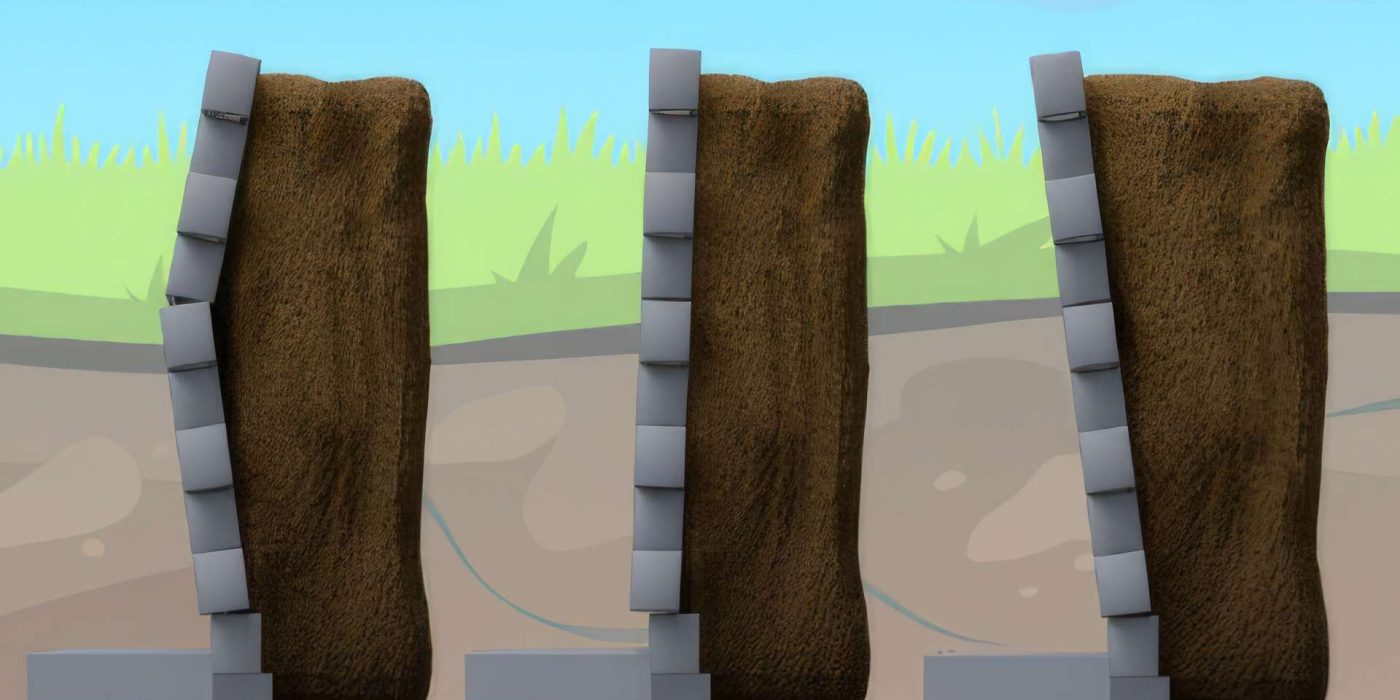

• Clients:

  • Category:

    Services

  • Services:

    Residential Commercial Industrial Bowing walls Structural support Wall Bracing Settlement

  • Social NetWork:

Foundation Wall Bracing & Reinforcement

Void Filling – Using Polyurethane to Fill, Stabilize and Reinforce Open Spaces, such as: Under Concrete Slabs, Concrete Leveling, Driveways, Sidewalks, Walkways and Patios, Under Structures Both Commercial and Residential, Porches and Stairs

Stop Bowing & Leaning Basement Walls

Before Structural Damage Spreads or Worsens

Foundation Wall Bracing & Reinforcement in Southeastern Michigan

Trusted Solutions for shifting, leaning and bowing foundation walls
In Residential, Commercial, and Industrial Properties

Foundation wall bracing and reinforcement is a long-lasting solution for stabilizing bowing, leaning, or inward-moving basement walls caused by soil pressure and structural stress. 


Whether you’re seeing horizontal or diagonal cracking in a home basement or managing structural concerns in a commercial or industrial facility, our team focuses on preventing further movement, protecting structural integrity, and supporting limited straightening when conditions allow. 


Each solution is tailored to your structure, site conditions, and long-term performance needs.

Are You Seeing Signs of Wall Movement or Structural Stress?

Serving homeowners, commercial properties, and industrial facilities across Southeast Michigan.

What Is Foundation Wall Bracing & Reinforcement?

Foundation wall bracing and reinforcement is a structural repair method designed to stabilize and strengthen compromised foundation walls. Reinforcement systems such as steel beams or carbon fiber supports are installed to prevent further inward movement and protect the structural integrity of the home or building.

What Foundation Wall Bracing & Reinforcement Fixes

Foundation wall bracing and reinforcement stabilizes compromised foundation walls.

Common conditions addressed include:

These systems are designed to stop further movement and restore structural stability. In some cases, minor straightening may be possible depending on the reinforcement method used and the condition of the wall.

Are you seeing any of these conditions?

Our team will help you determine the right reinforcement approach for your unique situation

Why Foundation Walls Move or Shift

In Southeast Michigan, foundation walls are exposed to constant pressure from surrounding soil, seasonal moisture changes, and freeze-thaw cycles. As soil absorbs water, it expands and pushes inward against basement walls, gradually increasing stress over time. In some cases, large trees and expanding root systems near the foundation can also contribute to cracking and wall movement by applying constant pressure or tension against the structure over time.


When this pressure exceeds what the wall can safely withstand, foundation walls may begin to bow, shift, or crack. Without reinforcement, movement often continues over time, increasing the risk of structural damage and more extensive repairs.

How Our Foundation Wall Bracing & Reinforcement Works

Wall bracing is used to stabilize bowed or shifting foundation walls and prevent further inward movement. The focus is on protecting structural integrity and stopping existing conditions from worsening.


Depending on wall condition and structural demands, reinforcement may involve one of the following systems:


  • Steel wall bracing, commonly referred to as I-beam bracing, using wider, high-strength steel beams (W4x13) designed for greater surface contact and structural support.
In select situations, steel bracing may be paired with force or push brackets to support limited straightening when conditions allow.
  • Carbon fiber wall reinforcement, which is used to stabilize walls and prevent additional movement, not to straighten them.


During installation, surrounding areas are protected and dust containment measures are used to minimize disruption.

Applications for Homes, Commercial, & Industrial Properties

Foundation wall bracing and reinforcement is used across a wide range of property types throughout Southeast Michigan, including residential, commercial, and industrial properties.

Residential Properties


  • Homes with block or poured concrete foundation walls
  • Properties showing early or progressive wall movement
  • Finished and unfinished basements

Commercial Properties


  • Office buildings and retail spaces
  • Multi-unit residential buildings
  • Utility and mechanical rooms

Industrial  Properties


  • Warehouses and industrial facilities
  • Load-bearing foundation walls
  • Structures exposed to sustained soil or water pressure

Why Choose Suburban Basement for Wall Bracing

Suburban Basement

Locally Owned
Independently Operated
Licensed & Insured
For Over 20 Years

Serving: Southeastern Michigan

Have Bowing Foundation Walls?

We’re here to help. Get your free assessment today.

Questions? Chat Now!
Related Materials
Frequently Asked Questions

Can foundation wall bracing stop further movement?

Yes. When properly installed, foundation wall bracing and reinforcement systems are designed to stabilize bowed or shifting walls and prevent additional inward movement caused by soil pressure.

Can bowed basement walls be straightened?

In some cases, limited straightening may be possible using steel I-beam wall bracing systems with force or push brackets, depending on wall condition and movement. Carbon fiber reinforcement stabilizes walls and prevents further movement but does not straighten them.

How do I know which reinforcement system is right?

The appropriate reinforcement system depends on the type of foundation wall, the amount and pattern of movement, and overall structural conditions. A professional assessment is required to determine the safest and most effective solution.

Is wall bracing suitable for finished basements?

In many cases, yes. Wall bracing can be installed in finished basements, with installation methods planned in advance based on access, wall condition, and layout to help minimize disruption.

Does wall movement always mean structural failure?

Not always, but wall movement is a warning sign that should be evaluated. Early reinforcement can help stabilize the foundation, protect structural integrity, and reduce the risk of more extensive repairs over time.

Wall Bracing Glossary​
Bowing Wall

A foundation wall that curves inward due to prolonged soil pressure and lateral forces acting against the structure.

Sideways or inward movement of a foundation wall caused by soil pressure pushing against the structure. Lateral movement can lead to bowing, cracking, or leaning walls over time.

Pressure exerted by water-saturated soil against foundation walls, often increasing during heavy rainfall, poor drainage, or seasonal freeze-thaw cycles.

A high-strength reinforcement method used to stabilize foundation walls and prevent further inward movement. Carbon fiber systems are designed for stabilization, not wall straightening.

A foundation wall reinforcement method that uses vertical steel beams, often referred to as I-beams. Suburban Basement installs wider, high-strength W4x13 steel beams anchored to the structure to stabilize bowing or shifting walls and support long-term structural performance. In select cases, steel wall bracing may be paired with force or push brackets to support limited straightening.

Structural components sometimes used with steel wall bracing systems to apply controlled pressure to bowed foundation walls. When site conditions allow, push brackets may support limited, gradual straightening over time while maintaining structural stability.

The ability of a foundation wall to safely support loads, resist movement, and maintain long-term stability.

WALL BRACING & REINFORCEMENT PHOTOS

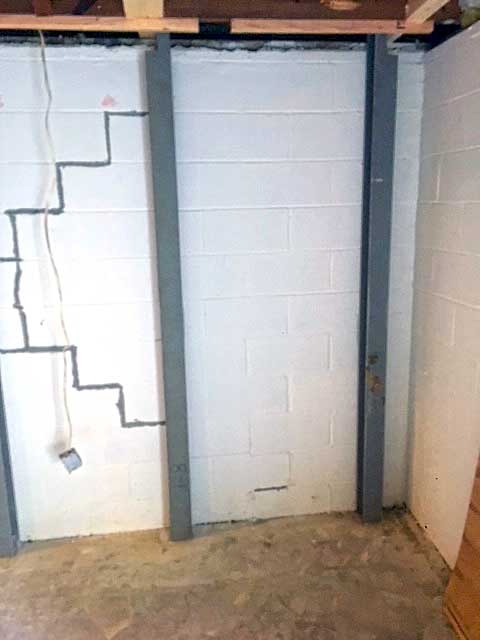
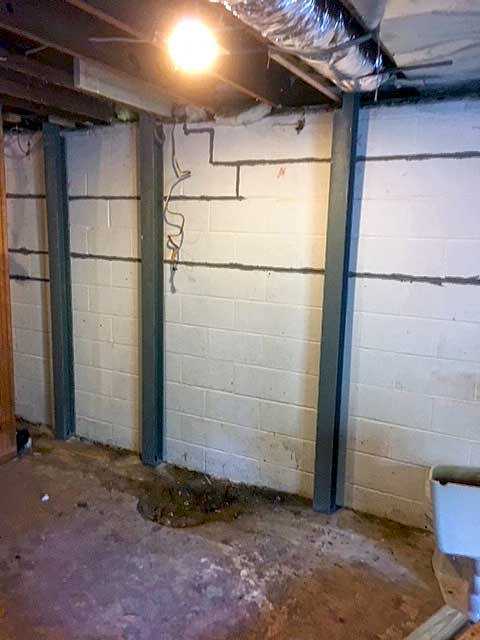
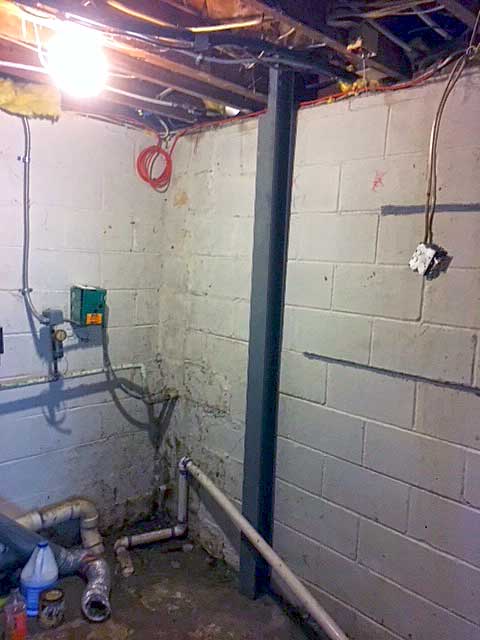
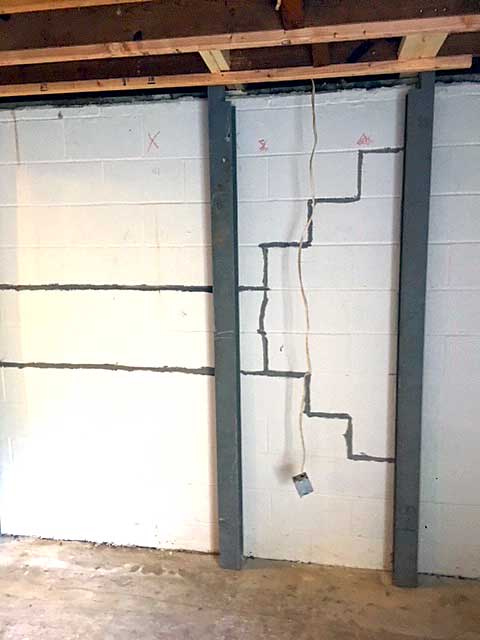
The examples below show real foundation wall bracing and reinforcement projects completed across Southeast Michigan. These photos highlight common wall movement conditions, reinforcement methods used, and how stabilization systems are installed to prevent further structural damage.

Previous Post

Basement Crack Injection & Sealing

Next Post

Basement Crack Injection & Sealing

Ask about our Lifetime Warranty

(586) 465-5500