


seawall repair header
  • Clients:

  • Category:

    Services

  • Services:

    Residential Commercial Industrial Void filling Structural support Polyurethane foam Settlement Soil stabilization

  • Social NetWork:

Seawall Repair

Void Filling – Using Polyurethane to Fill, Stabilize and Reinforce Open Spaces, such as: Under Concrete Slabs, Concrete Leveling, Driveways, Sidewalks, Walkways and Patios, Under Structures Both Commercial and Residential, Porches and Stairs

Seawall Leak Sealing and Soil Stabilization in Southeast Michigan

Stop Water Intrusion and Prevent Shoreline Erosion for Residential, Commercial, and Industrial Properties

Water passing through or behind a seawall can quietly wash out soil, create hidden voids, and weaken shoreline support over time. Suburban Basement provides professional seawall repair services that stop water intrusion, stabilize soil, and restore support behind seawalls without rebuilding or replacing the wall itself.


We specialize in curtain grouting and void filling, proven injection methods used to seal hidden water pathways and stabilize the ground behind concrete, steel, and stone seawalls across Southeast Michigan.

Not sure what’s happening behind your seawall? Schedule a Shoreline Evaluation Today

What Seawall Repair Is

Seawall repair is the process of restoring and stabilizing failing or deteriorating shoreline retaining walls to prevent soil loss, void formation, and structural collapse. Repairs often involve filling washouts, sealing joints, and reinforcing weakened sections to protect the property behind the wall.

What Problems Seawall Repair Addresses

Seawalls often appear solid on the surface while serious issues develop out of sight. Our seawall repair solutions are designed to correct the underlying causes of failure, not just the visible symptoms.


Professional seawall repair can help address:

By sealing leaks and stabilizing the soil behind the wall, we help extend the service life of your existing seawall and reduce the risk of larger structural failures.

Not sure what’s causing your seawall issues?

Request a free estimate and we’ll help you determine the right repair.

Why Seawalls Develop Leaks and Voids

Seawalls throughout Southeast Michigan are constantly exposed to water pressure, wave action, freeze-thaw cycles, and fluctuating water levels. Over time, these forces can create pathways for water to move behind the wall.


Common causes include:

  • Natural soil erosion from water movement
  • Poor drainage behind the seawall
  • Aging joints, seams, or penetrations
  • Loss of backfill due to repeated saturation
  • Freeze-thaw expansion creating gaps and channels

Once water begins moving behind the wall, soil loss accelerates, leading to voids, settlement, and instability.

How Our Seawall Repair Process Works

Our seawall repair process focuses on stopping water movement and restoring soil support behind the wall, not cosmetic surface fixes. By addressing the root cause of erosion and instability, we help extend the life of existing seawalls without rebuilding or replacing the structure.

Curtain Grouting for Seawalls

Curtain grouting is an injection method used to create a waterproof barrier behind the seawall. Injection material is placed through the wall or from the land side to seal hidden water pathways in the surrounding soil.


This process prevents water from passing through or behind the seawall, helping reduce erosion and ongoing soil loss that can compromise shoreline stability.

Void Filling and Soil Stabilization

When soil has already washed out behind the seawall, void filling is used to restore support. Expanding injection material is placed into existing voids to stabilize the surrounding ground and prevent further settlement.


By filling hidden voids and reinforcing the soil behind the wall, we help protect the seawall from additional movement or erosion over time.

Important Note About Structural Repairs

We do not repair or modify the seawall structure itself.


Our work focuses on sealing water intrusion and stabilizing the soil behind the wall, which is often the underlying cause of seawall failure. This approach allows many seawalls to remain in service without the cost and disruption of full replacement.

Seawalls We Stabilize

Our seawall repair methods are effective on a wide range of shoreline structures, including:

  • Concrete seawalls
  • Steel seawalls
  • Decorative stone or stone-faced seawalls
  • Stone-like and composite seawall systems

These solutions are suitable for residential waterfront properties, commercial shoreline sites, and industrial or municipal environments.

Safe for Waterfront and Potable Water Environments

All injection materials used in our seawall repair process are NSF approved for contact with potable water. This makes our solutions safe for use in and around:

  • Lakes and canals
  • Residential waterfront properties
  • Marinas and public shorelines
  • Commercial and industrial sites connected to regulated water systems

You get effective stabilization without introducing harmful materials into surrounding water sources.

Applications for Residential, Commercial, & Industrial Properties

Our seawall repair solutions are applied across a wide range of shoreline environments throughout Southeast Michigan. By sealing water intrusion and stabilizing soil behind the wall, we help protect properties where erosion, washout, or hidden voids threaten long-term stability.

Residential Applications


  • Lakefront homes with existing seawalls
  • Canal-front residential properties
  • Shoreline stabilization behind intact seawalls
  • Waterfront homes preparing for sale or inspection
  • Seasonal properties facing rising water levels
  • Homes where seawall replacement is not desired

Commercial Applications


  • Marinas and waterfront businesses
  • Canal-adjacent commercial properties
  • Shoreline stabilization behind intact seawalls
  • Commercial sites preparing for inspections or upgrades
  • Properties exposed to fluctuating water levels
  • Sites where full seawall replacement is not desired

Industrial  Applications


  • Ports and industrial shoreline facilities
  • Municipal waterfronts and public shorelines
  • Utility and infrastructure-adjacent properties
  • Shoreline stabilization behind intact seawalls
  • Sites exposed to fluctuating water conditions
  • Locations where seawall replacement is not feasible

These applications represent common situations where seawall repair may be appropriate. A professional shoreline evaluation helps determine the best solution for your specific conditions.

Seeing shoreline changes you can’t explain?

Why Choose Suburban Basement for Seawall Repairs

Our goal is to provide solutions that are technically appropriate, cost-effective, and aligned with the long-term needs of the property.


Shorelines in Southeast Michigan are affected by fluctuating water levels, freeze-thaw cycles, and seasonal soil movement. Our repair recommendations account for these regional conditions rather than relying on one-size-fits-all solutions.


We believe property owners should understand what is happening behind their seawall and why a specific repair approach is recommended. Our evaluations focus on clarity, realistic expectations, and transparent recommendations.

Suburban Basement

Locally Owned
Independently Operated
Licensed & Insured
For Over 20 Years

Serving: Southeastern Michigan

Seawall Leaking or Eroding?

We’re here to help. Get your free assessment today.

Questions? Chat Now!
Frequently Asked Questions

What is seawall repair?

Seawall repair focuses on sealing water intrusion and stabilizing soil behind an existing seawall to address erosion, washout, and instability. Unlike replacement, repair preserves the existing wall structure when it remains largely intact and does not involve removing or rebuilding the seawall. This approach is often less disruptive and more cost-effective than full replacement.

Can a seawall leak if it looks intact?

Can a seawall leak if it looks intact? Yes. Many seawalls appear solid on the surface while water is moving through or behind the wall. This hidden water movement can wash out soil, create voids, and weaken shoreline support without visible damage to the wall itself. Professional evaluation is often needed to identify subsurface issues.

What causes soil washout behind a seawall?

Soil washout is typically caused by water moving through gaps, joints, or porous areas behind the seawall. Fluctuating water levels, wave action, poor drainage, and freeze-thaw cycles can all accelerate soil loss over time. Left unaddressed, washout often leads to hidden voids and shoreline instability.

How does curtain grouting work for seawall repair?

How does curtain grouting work for seawall repair? Curtain grouting is an injection method that creates a waterproof barrier in the soil behind the seawall. Injection material is placed through the wall or from the land side to seal hidden water pathways and prevent water from moving through or behind the structure. This method is commonly used to control ongoing water intrusion.

When is void filling used in seawall repair?

Void filling is used when soil has already washed out behind the seawall, creating empty spaces that reduce support. Expanding injection material is placed into these voids to restore soil support and help prevent settlement or further erosion. Void filling is often combined with curtain grouting for comprehensive stabilization.

Is polyurethane injection safe for lakes and drinking water?

Yes. The injection materials used in our seawall repair process are NSF approved for contact with potable water. This makes them safe for use around lakes, canals, marinas, and properties connected to regulated water systems. No harmful materials are introduced into surrounding water sources.

What types of seawalls can be repaired?

Seawall repair methods are effective on many existing wall types, including concrete, steel, stone, stone-faced, and composite seawall systems. The suitability of repair depends on the condition of the wall and the underlying soil, not just the wall material. A professional evaluation helps determine feasibility.

Is seawall repair for residential and commercial properties?

Yes. Seawall repair is commonly applied to residential waterfront homes, commercial shoreline properties, marinas, and industrial or municipal sites. The repair approach is adjusted based on site conditions, water exposure, and usage demands. A professional evaluation helps determine feasibility.

Can seawall repair prevent future erosion?

Seawall repair helps reduce future erosion by sealing water pathways and stabilizing soil behind the wall. While no solution can eliminate all shoreline movement, addressing water intrusion and soil loss significantly improves long-term stability and reduces ongoing erosion risks. A professional evaluation helps determine feasibility.

How do I know if seawall repair is the right solution?

If your seawall remains largely intact but you are seeing erosion, soil loss, settlement, or water movement near the shoreline, repair may be appropriate. A professional shoreline evaluation is the best way to determine whether curtain grouting, void filling, or another approach is suitable for your specific conditions. A professional evaluation helps determine feasibility.

Crack Repair Glossary​
Shoreline Erosion

Shoreline erosion is the gradual loss of soil along the water’s edge due to wave action, fluctuating water levels, and water movement. When erosion occurs behind a seawall, it can compromise the stability of the structure even if the wall appears intact.

Water intrusion occurs when water moves through soil, joints, or pathways behind a seawall. Over time, this movement can lead to erosion, void formation, and loss of soil support.

Soil washout refers to the removal of soil particles by moving water. Behind seawalls, washout often leads to hidden voids that weaken shoreline support and contribute to settlement or instability.

Hidden voids are empty spaces that form beneath or behind a seawall when soil is washed away. These voids are often not visible at the surface but can lead to settlement, depressions, or shoreline failure.

Backfill is the soil placed behind a seawall during construction. Over time, water movement can displace or wash out backfill, reducing support and creating voids that require stabilization.

Freeze-thaw cycles occur when water in soil freezes and expands, then thaws and contracts. In shoreline environments, this process can create gaps, channels, and pathways that allow water to move behind seawalls.

Shoreline stabilization is the process of reducing soil movement and erosion along the water’s edge. Seawall repair contributes to stabilization by controlling water intrusion and reinforcing soil behind existing walls.

Curtain grouting is an injection method used to create a waterproof barrier in the soil behind a seawall. Injection material is placed through the wall or from the land side to seal hidden water pathways and prevent water from moving through or behind the structure.

Void filling is a stabilization method used to fill empty spaces in soil that have formed due to erosion or washout. Expanding material is injected to restore support behind the seawall and help prevent settlement or further erosion.

Soil stabilization involves reinforcing loose or compromised soil to improve its load-bearing capacity and reduce movement. In seawall repair, stabilization helps restore support behind the wall and reduce the risk of shoreline instability.

Potable water safe materials are injection materials approved for contact with drinking water. In seawall repair, NSF-approved materials are used to ensure stabilization does not introduce harmful substances into surrounding water systems.

SEAWALL REPAIR PHOTOS

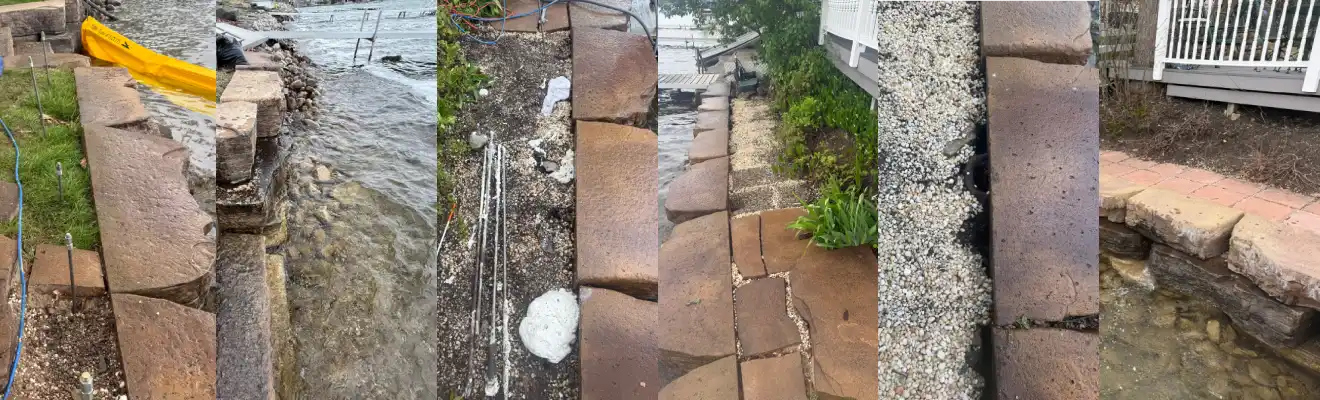
The examples below show seawall repair and stabilization projects across Southeast Michigan, highlighting how erosion and voids develop, how water intrusion is identified, and how injection-based repairs are performed.

Previous Post

Structural Void Filling & Underground Abatement

Next Post

Structural Void Filling & Underground Abatement

Ask about our Lifetime Warranty

(586) 465-5500