

• Clients:

  • Social NetWork:

Interior Basement Drain Tile Systems

Void Filling – Using Polyurethane to Fill, Stabilize and Reinforce Open Spaces, such as: Under Concrete Slabs, Concrete Leveling, Driveways, Sidewalks, Walkways and Patios, Under Structures Both Commercial and Residential, Porches and Stairs

Basement Drain Tile Systems in Southeastern Michigan

For Managing Groundwater and Hydrostatic Pressure

Trusted solutions for homeowners, commercial properties, and industrial facilities with basement water issues.

Water entering your basement along the floor or foundation walls is often a sign of ongoing groundwater pressure rather than a surface-level issue. Interior drain tile systems are designed to manage this water at its source by controlling how it moves beneath and around your foundation. Suburban Basement Waterproofing provides professionally designed drain tile solutions throughout Southeastern Michigan, backed by decades of experience and our lifetime transferable warranty.

Tired of Dealing with a Damp Basement?

If you are seeing water where the wall meets the floor or dealing with repeated basement seepage, our team can help.

What Basement Drain Tile Systems Fix

Interior drain tile systems address basement water problems caused by groundwater pressure and subsurface water movement, including water that is not effectively managed by exterior drainage or preventative measures alone.


This service is commonly used to resolve:

An interior drain tile system is a basement water management solution that can be installed along problem areas or around the entire foundation perimeter, depending on the conditions present.

If these conditions sound familiar, our team is here to help.

Request a free assessment to determine if an interior drain tile system is right for your basement.

Why Michigan Foundations Experience Water Problems

In Southeastern Michigan, heavy clay soils, seasonal freeze-thaw cycles, and rising groundwater levels place constant pressure against foundation walls and footings. As this pressure builds, water naturally seeks the path of least resistance, often entering where the foundation wall meets the floor.


This process, known as hydrostatic pressure, cannot be fully resolved with surface repairs alone. Without a proper drainage path, water continues to accumulate beneath the basement slab and forces its way inside.

How Our Basement Drain Tile Systems Work

Drain tile systems work by intercepting groundwater before it enters basement areas used for living, storage, or operations, and directing it to a controlled discharge point.


Depending on the property and conditions, solutions may include interior perimeter drainage, sump integration, vapor barriers, and coordinated water management strategies. Each system is designed based on foundation type, basement layout, and observed water behavior, rather than a one-size-fits-all approach.


Our goal is to manage water pressure while minimizing disruption to the structure and interior space.

Applications for Residential, Commercial, and Industrial Properties

Basement drain tile systems are used across Southeastern Michigan to manage groundwater intrusion in a wide range of structures.

Residential Applications


  • Managing water seepage at the wall-floor joint
  • Reducing basement water after heavy rain or snowmelt
  • Protecting finished and partially finished basements
  • Controlling dampness and musty odors from subsurface moisture
  • Providing long-term water management for homes of all ages

Commercial Applications


  • Managing water intrusion in offices and retail spaces
  • Protecting finished lower levels and tenant build-outs
  • Reducing moisture-related maintenance concerns
  • Supporting consistent interior conditions
  • Preserving long-term property value

Industrial  Applications


  • Managing groundwater in utility and service areas
  • Preventing water intrusion near equipment zones
  • Controlling moisture in concrete and masonry structures
  • Reducing long-term exposure to subsurface water
  • Supporting durability in demanding environments

Why Choose Suburban Basement for Basement Drain Tile Systems

We focus on accurate problem identification so the solution actually works.

Suburban Basement

Locally Owned
Independently Operated
Licensed & Insured
For Over 20 Years

Serving: Southeastern Michigan

Looking for Drainage Solutions?

We’re here to help. Get your free assessment today.

Questions? Chat Now!
Frequently Asked Questions

How do I know if a drain tile system is the right solution for my basement?

Drain tile is typically recommended when water enters along the wall-floor joint or returns repeatedly after heavy rain or snowmelt. If moisture is widespread or recurring, it often indicates groundwater pressure rather than a surface issue. A professional assessment can confirm whether drain tile is the right approach for your specific conditions.

Is a drain tile system different from crack repair?

Yes. Crack repair addresses specific entry points, while a drain tile system manages groundwater pressure beneath and around the foundation. In many cases, drain tile is used when water intrusion is not limited to a single crack or location.

Will drain tile work in a finished basement?

Yes. Drain tile systems can be installed in finished basements when proper preparation is completed in advance. Many homeowners and property managers choose to install drain tile before finishing a basement to avoid future disruption. For already finished spaces, a site evaluation helps identify required access and preparation.

Does every drain tile system require a sump pump?

Not always. Some systems rely on gravity drainage, while others include a sump pump to actively move collected water away from the foundation. In some cases, a suitable bleeder line or discharge path allows water to drain without a pump. The key factor is ensuring the system has a clear path to move water away from the foundation.

How long does a drain tile system last?

When properly installed, drain tile systems are designed for long-term performance. This service is covered by Suburban Basement Waterproofing’s lifetime transferable warranty.

Can drain tile be combined with other foundation solutions?

Yes. Drain tile systems are often integrated with vapor barriers, sump pumps, or wall reinforcement when conditions require it. Each system is designed based on observed moisture patterns and structural needs.

Drain Tile Glossary​
Foundation Footings

The concrete base that supports the foundation walls of a home or building. Interior drain tile systems are typically installed near the footings to capture groundwater before it can rise and enter the basement.

A cove joint is the intentional gap where the foundation wall meets the basement floor. It allows groundwater entering at the base of the wall to flow into the drain tile system rather than forcing pressure against the wall or floor. Cove joints are a standard part of interior drain tile installations and are designed to manage water, not prevent it.

The force created when groundwater builds up around a foundation and presses against basement walls and floors. As this pressure increases, water seeks entry points such as the wall-floor joint. Drain tile systems are designed to relieve hydrostatic pressure by giving water a controlled path away from the foundation.

A sump basin is a collection pit installed below the basement floor where drain tile directs water. A sump pump is placed inside the basin to actively move collected water away from the foundation when gravity drainage is not possible.

A discharge path that allows collected groundwater to drain away from the foundation without the use of a sump pump. When a suitable bleeder line is available, water can exit the system by gravity instead of mechanical pumping.

A wall covering used in some drain tile systems to guide moisture down the foundation wall and into the drainage system below. Vapor barriers may be installed along part of the wall or the full height, depending on observed moisture conditions.

A narrow section of the basement floor that is opened to install the drain tile pipe and gravel. After installation, the trench is typically restored with concrete to blend with the existing floor surface.

BASEMENT DRAIN TILE PHOTOS

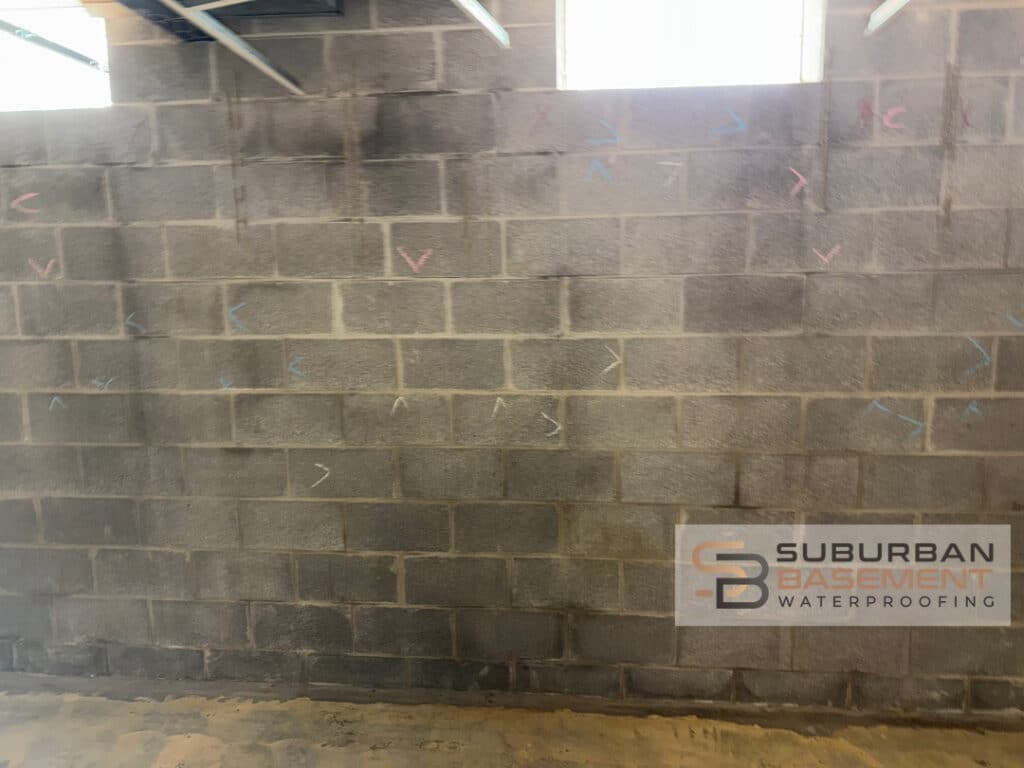
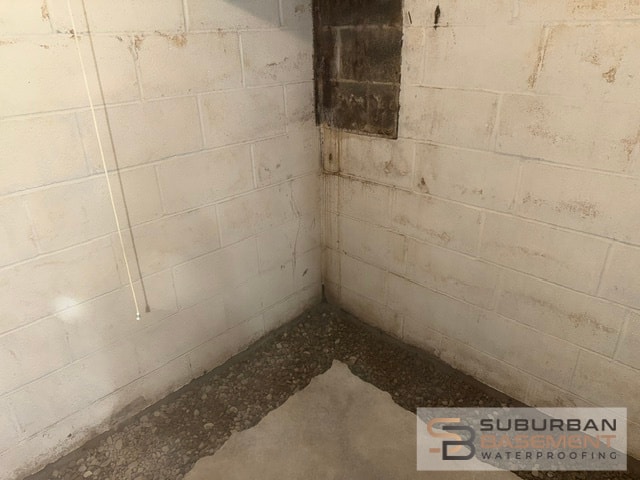
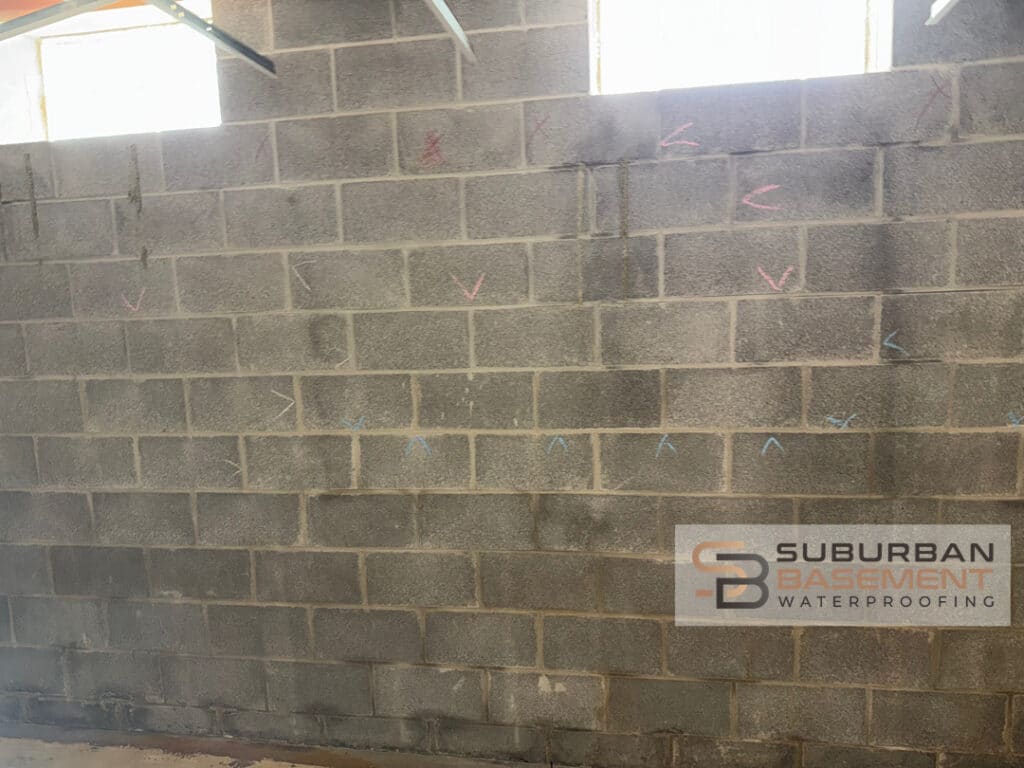
The examples below show basement drain tile systems across Southeast Michigan, highlighting installation methods, water management components, and how properly designed systems control groundwater intrusion.

Previous Post

Foundation Wall Bracing & Reinforcement

Ask about our Lifetime Warranty

(586) 465-5500