A Condo Living Room Slab Caving In Over Large Voids, With HVAC Ductwork Beneath It
Voids filled, soil stabilized and the floor brought back to level around the ductwork, with no demolition.
At a Glance
Location: Troy, Michigan, condominium
Problem: Living room slab sunk, buckling and caving in down the center
Cause: Large voids beneath the slab
Complication: HVAC ductwork beneath the slab that the foam had to stay out of
Solution: Void filling and soil stabilization together in strategic areas, then leveling
Time on site: One full day
Result: Slab back to level, voids filled, no foam in the ductwork
The Call
We were brought in on this job by a restoration company working on a condominium in Troy. The living room sits on a concrete slab, and the slab had sunk and was buckling and caving in down the center.
The restoration company worked with the condo’s property manager to get approval for our work, and pulled the carpeting up before we began.
What We Found
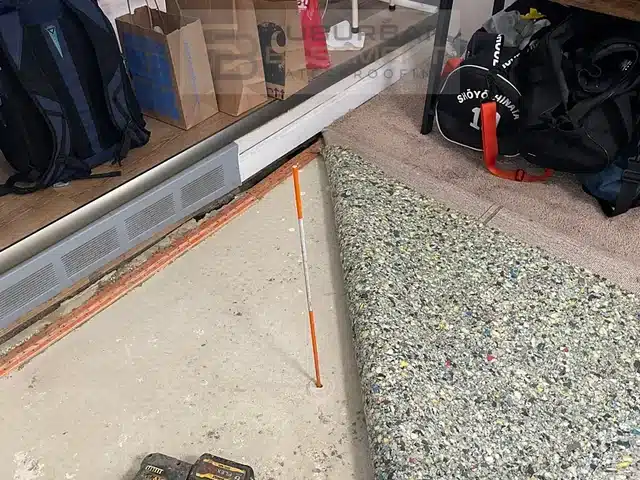
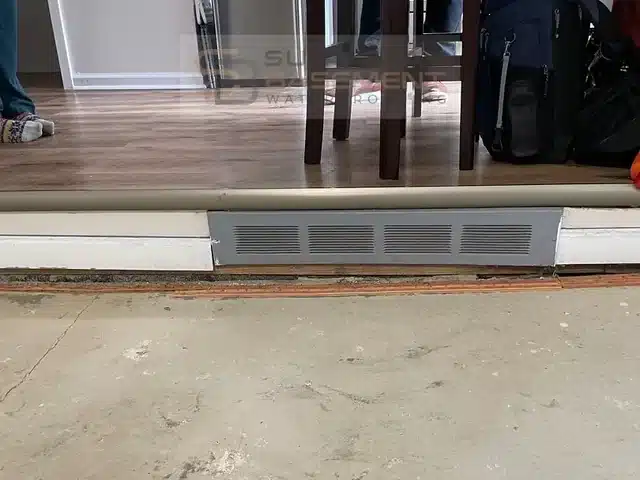
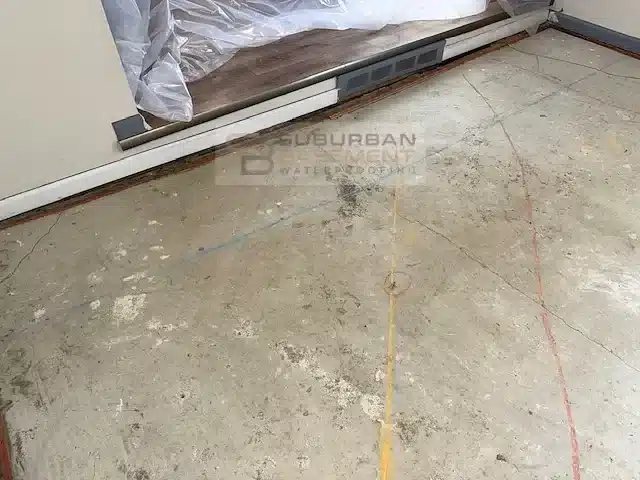
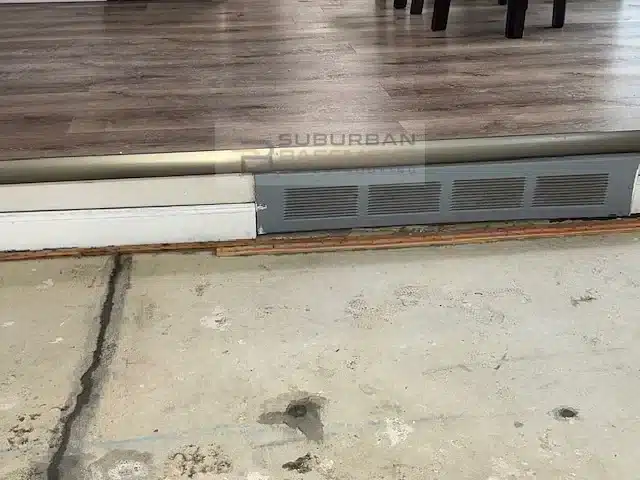
Large voids had developed underneath the living room slab. The floor had sunk and buckled, in places right up under the trim.
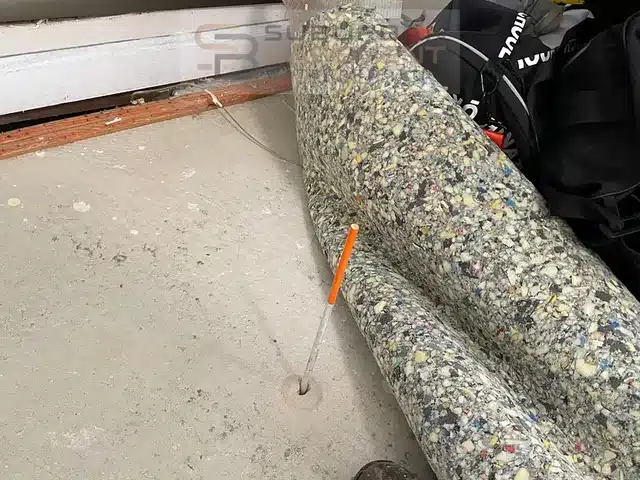
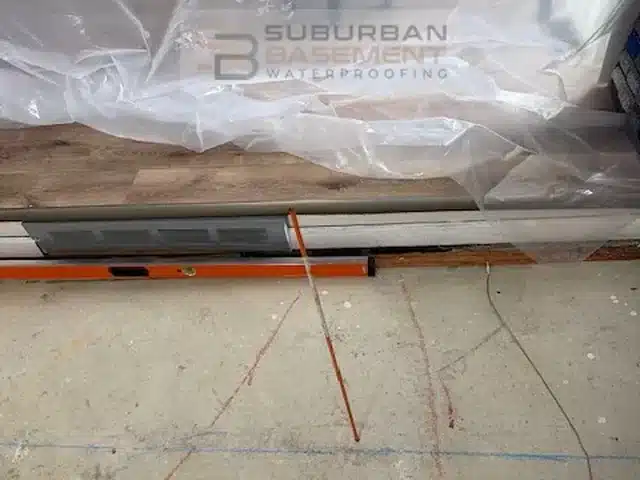
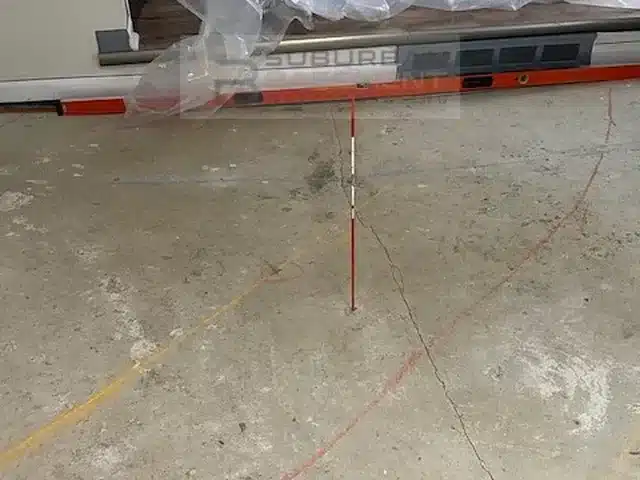
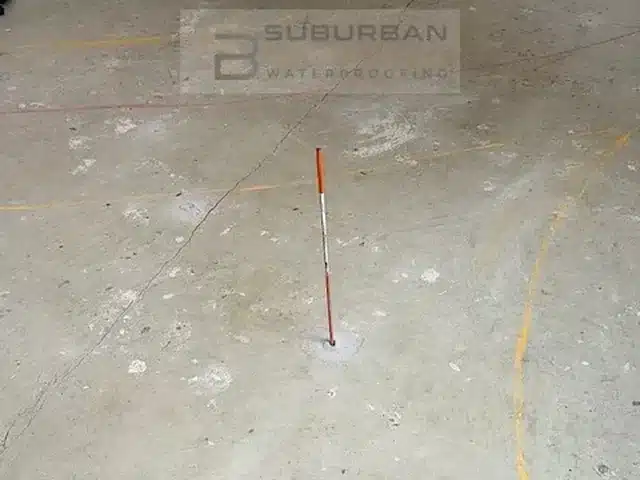
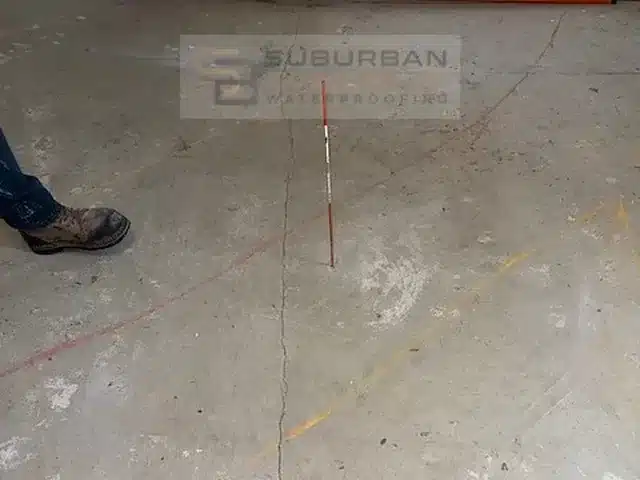
We used a plow marker, a snow plow driveway stake, to determine where and to what extent the voids were, and to mark them. It’s a basic tool, but it serves as a great one.
HVAC ductwork ran underneath the slab. The restoration company’s HVAC crew showed the project manager where it ran, and we marked those runs on the floor in color chalk.
What We Did
With the ductwork chalked out, we void filled strategic areas throughout the living room and avoided filling directly next to the ductwork, so no foam got into it.
We achieved void fill throughout the entire area underneath the slab, and the ductwork was left clear.
The work went in order:
Void filling in strategic areas, hand in hand with soil stabilization
Leveling the concrete back into place
Because of the size of the voids and the obstacles we had to watch out for, it took a full day to complete properly, with no issues.
No concrete was removed and no part of the floor was demolished.
Why Not Replace the Slab?
Replacing the slab would have meant:
Demolishing and removing the existing concrete
Bringing in aggregate to rebuild the base
Pouring new concrete
Waiting for it to cure before the room could be used
None of that was needed.
The Result
The living room slab is back to level, the voids beneath it are filled, the soil is stabilized, and no foam got into the ductwork.
The slab was usable right away.
Project Photos
Determining the amount of void on the first site visit.
Another view from the first site visit, using a plow marker to determine the amount of void.
Determining the amount of void on the first site visit, with the carpet pad rolled back.
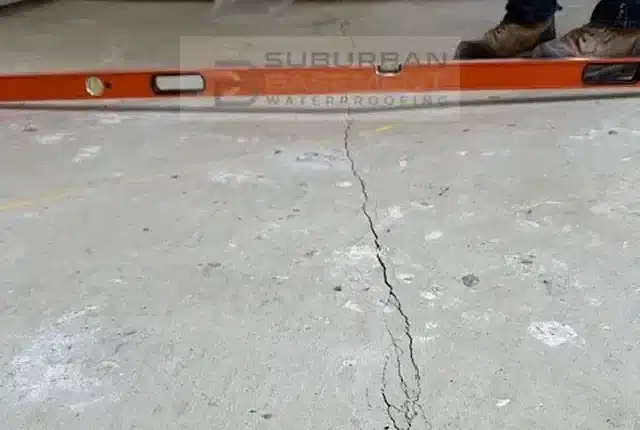
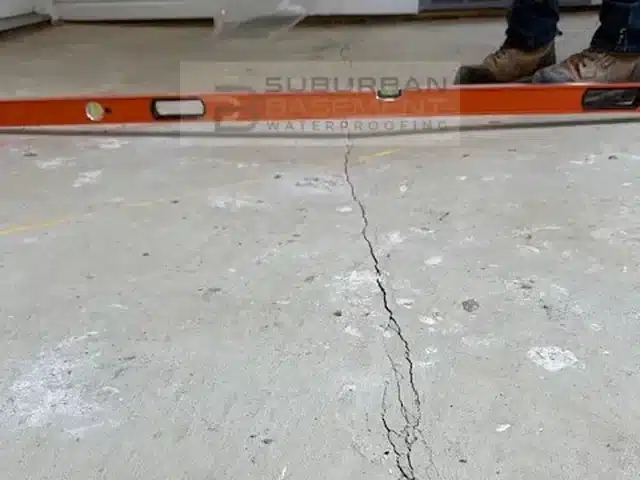
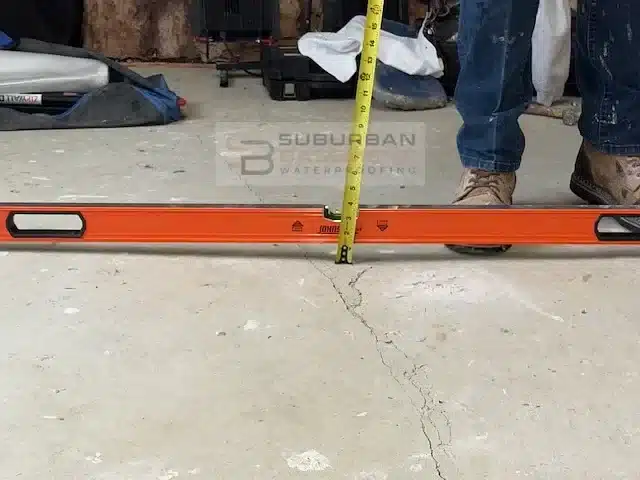
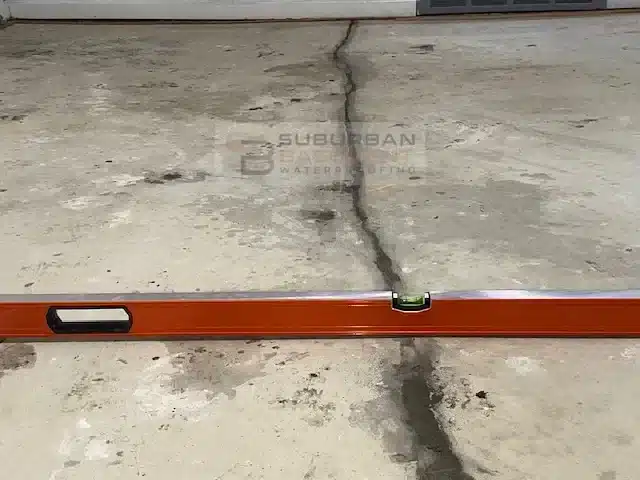
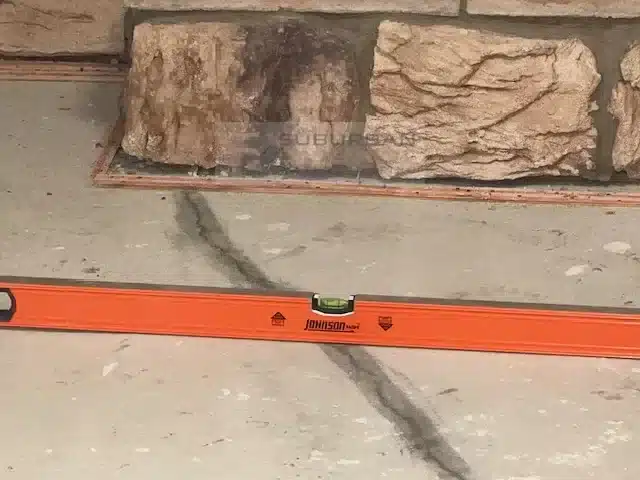
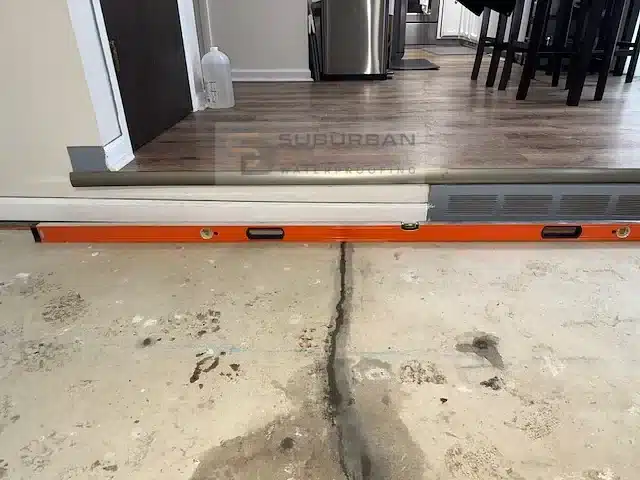
The condo living room slab in Troy, MI before void filling and leveling, with a level across the crack.
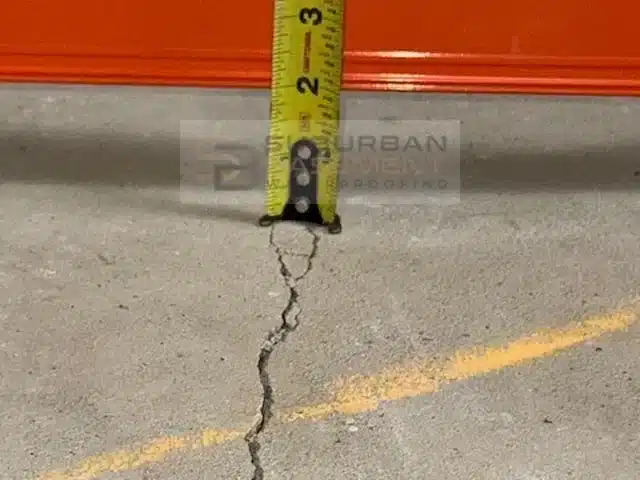
Measuring the drop at the crack before void filling and leveling.
Measuring how far the slab had dropped before void filling and leveling.
How far the living room floor had sunk and buckled.
How far the floor had sunk and buckled, and how big the void under the slab was.
The floor buckling in under the trim.
Color chalk marking where the HVAC ductwork runs so we could avoid filling next to it, with a plow marker used to determine the amount of void under the slab.
Another view of the chalked ductwork lines and the plow marker.
A void under the slab marked with a plow marker.
The slab back to level after void filling and leveling.
Another view of the slab back to level after void filling and leveling.
Void fill and leveling completed.
Another view of the completed void fill and leveling.
Questions From This Job
Why was the living room floor caving in down the center? Large voids had formed beneath the slab, and the floor had sunk and buckled over them, in places right up under the trim.
Can a slab be leveled if there is ductwork underneath it? Yes. On this job the ductwork runs were marked on the floor in color chalk, and we void filled strategic areas while avoiding filling directly next to the ductwork, so no foam got into it.
How did you determine where and to what extent the voids were? We made test holes in various areas around the slab and used a plow marker, a snow plow driveway stake, to determine where and to what extent the voids were. We also used the plow marker to mark the voids.
How long did the repair take? One full day. The size of the voids and the obstacles we had to watch out for meant taking the time to complete it properly, with no issues.
Did the flooring have to come up? On this job the restoration company pulled the carpeting up before we began our work.
Is a Concrete Floor in Your Home or Condo Sinking or Buckling?
Call Suburban Basement Waterproofing